Solid-state batteries for energy storage attract attention because they may store more energy in less space and reduce reliance on flammable liquid electrolyte. But a battery that works well in a laboratory or a weight-sensitive vehicle is not automatically the best choice for a home or commercial project. If you are planning storage in 2026, the useful question is whether a specific product can meet your load, installation, safety, service and budget requirements today.
What Do “Solid-State” and “Semi-Solid” Mean?
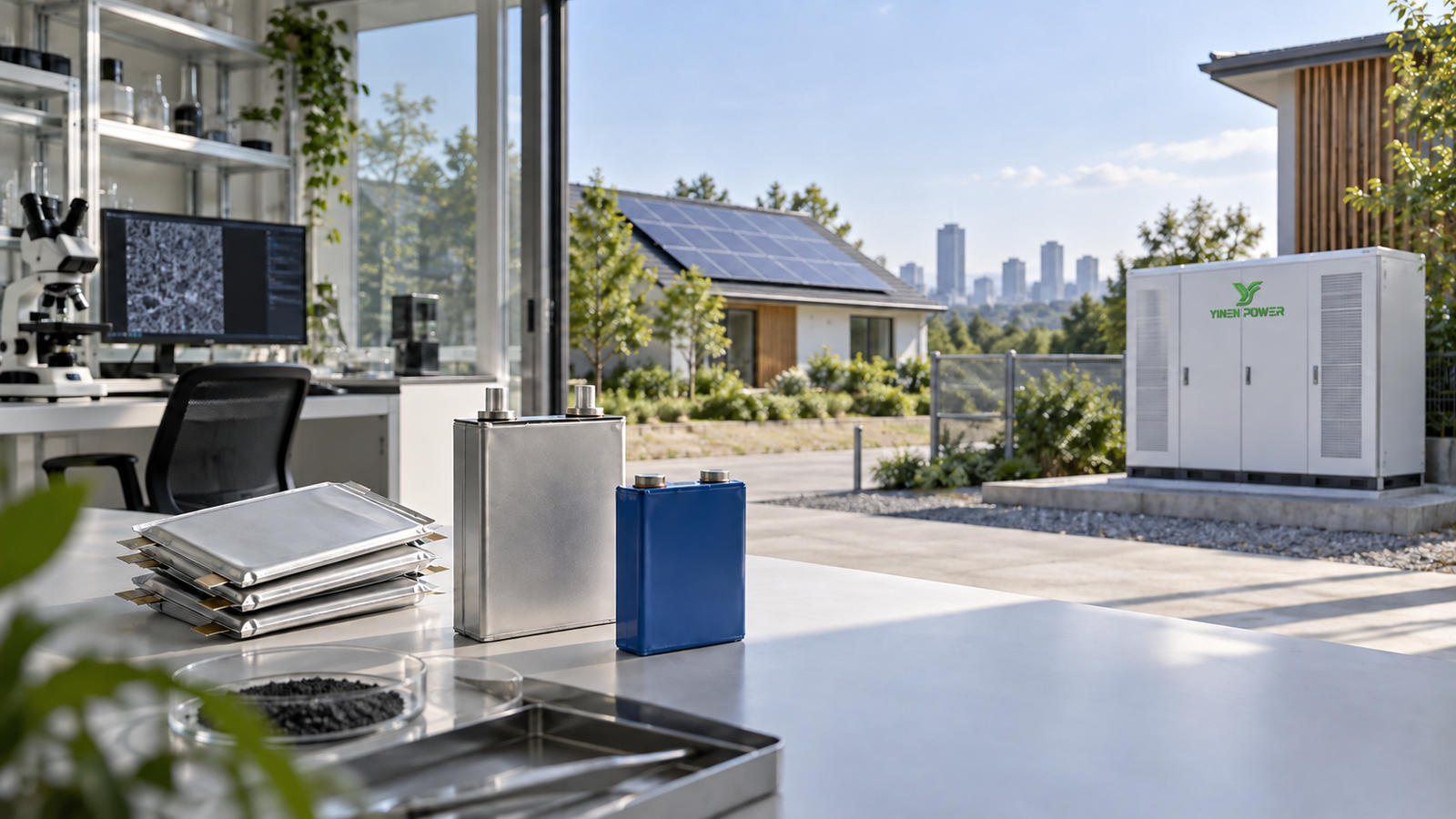
In a conventional lithium-ion cell, ions move through an electrolyte that contains liquid. An all-solid-state design replaces the liquid electrolyte and separator with a solid electrolyte. Some designs described as solid-state or semi-solid still contain a limited amount of liquid to improve contact between materials. Because these labels can describe different cell architectures, ask a supplier what is actually inside the offered cell before comparing performance claims.
The potential advantage is attractive: a solid electrolyte could support different electrode designs and higher cell energy density. The engineering challenge is equally real. Contact and stability at the electrode–electrolyte interface, manufacturing consistency and performance over many cycles must be demonstrated in the finished product, not inferred from a laboratory cell. The U.S. Department of Energy's Energy Storage Safety Strategic Plan describes both the promise and remaining commercialization questions.
Why the Drone Battery Story Does Not Transfer Directly to Stationary Storage

For a drone, battery mass can determine whether a mission is possible. Higher energy per kilogram may therefore justify a different balance of cost, lifespan and operating conditions. A wall-mounted home battery or an outdoor commercial cabinet does not face the same weight constraint. Its owner will usually care more about usable energy, output power, cycle and calendar life, thermal management, maintainability and total installed cost.
That difference changes the procurement test. A claimed cell energy density in Wh/kg says little about how many hours a building can run. A stationary system includes the battery, battery management system, inverter or power conversion system, controls, enclosure, protection and installation work. The U.S. Department of Energy's BESS implementation guidance treats these as a system and emphasizes sizing around the application.
| Buyer question | Weight-sensitive drone | Home or commercial storage |
|---|---|---|
| What limits the design? | Mass, volume and flight power | Load profile, space, grid connection and budget |
| What must the quote prove? | Pack mass, discharge capability and mission endurance | Usable kWh, continuous and surge kW, operating strategy and installed cost |
| What matters after delivery? | Flight-cycle performance and field handling | Service access, monitoring, replacement planning and local compliance |
Solid-State vs. LiFePO₄ for an Energy Storage Project
LiFePO₄, also called LFP, is an established lithium-ion chemistry used in stationary battery energy storage systems. Solid-state describes the electrolyte architecture; it is not a single finished product or a universal replacement for LFP. A fair comparison therefore needs real system offers for the same duty, rather than a cell-level figure on one side and a complete cabinet specification on the other.
For a home or commercial project, request the following information from every shortlisted supplier:
- Usable energy: How many kWh are available at the stated operating limits, and under what test conditions?
- Power: What continuous and short-duration output can the complete system supply, including inverter limits?
- Lifetime: What are the cycle-life test conditions, calendar-life assumptions and warranty exclusions?
- Safety and compliance: Which documents apply to the exact model and destination market? What protection, thermal management and installation requirements are included?
- Integration: Which inverters, communications protocols and monitoring functions are supported in the quoted configuration?
- Commercial readiness: What are the lead time, service route, spare-parts plan and total installed cost?
Do not turn any one answer into a universal ranking. A higher energy-density cell can still be a poor fit if the complete system is unavailable, incompatible with the project or expensive to maintain. Conversely, a familiar chemistry still needs proper system design and installation; chemistry alone does not guarantee safety.
Where YINEN POWER Fits Today
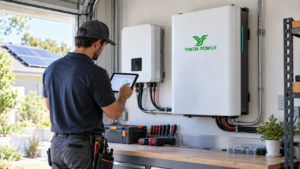
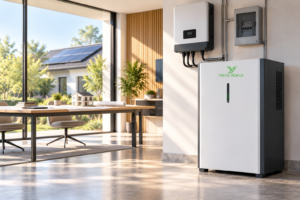
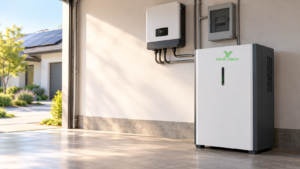
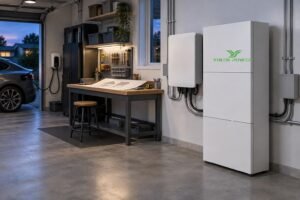
YINEN POWER's current public product range centers on LiFePO₄ stationary storage and solar power equipment, including home battery energy storage in several installation formats and commercial battery energy storage systems. Its home energy solutions page explains how battery storage, solar generation and inverter selection are considered together. These are the product directions to evaluate when a project needs a currently offered stationary system.
For example, a homeowner asking for outage backup should first list essential circuits, simultaneous power demand and desired backup hours. An EPC team planning peak management at a factory should start with interval load data, tariff structure, site constraints and the intended dispatch schedule. Neither project can be sized reliably from the battery chemistry name alone.
YINEN POWER can discuss a product direction after reviewing those inputs. The exact battery model, usable capacity, inverter pairing, communication method and market-specific documents should be confirmed in the project quotation and current datasheets. This keeps a technology discussion connected to an installable system.
A Practical Decision Framework for 2026
If you are choosing an energy storage system now, make the purchase decision in this order:
- Define the job. Is the main goal backup, solar self-consumption, peak shaving, off-grid operation or a combination?
- Measure demand. Separate energy in kWh from power in kW. Record continuous loads, starting surges and the hours each critical load must run.
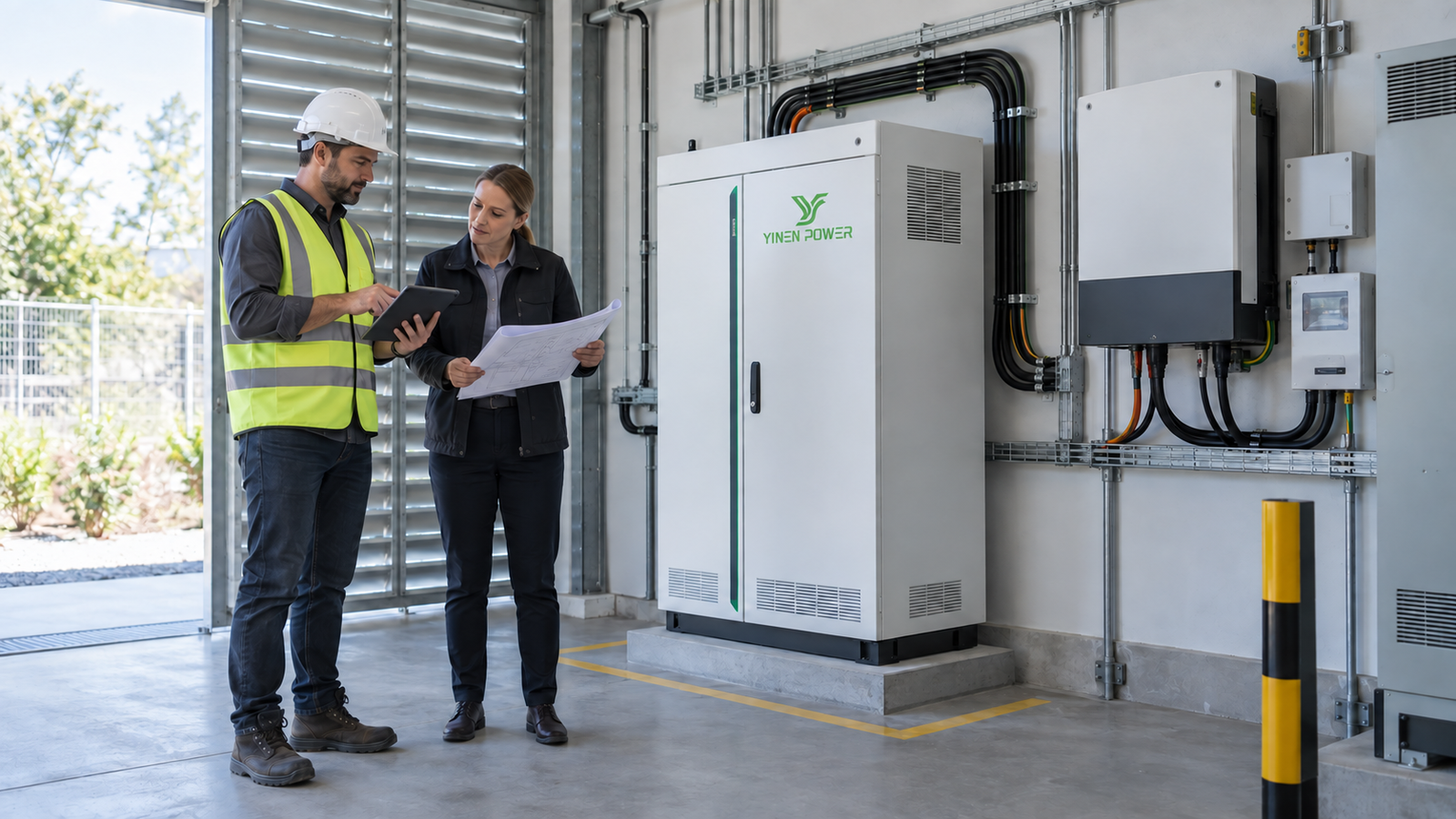
- Check the whole system. Review the battery, inverter, controls, protections, enclosure and installation environment together.
- Compare documented offers. Use model-specific datasheets, test conditions, warranty terms, compliance documents and installed pricing.
- Plan operation and service. Confirm who commissions, monitors and maintains the system in the destination market.
Solid-state technology deserves attention as it develops, especially where lower mass or greater energy density has clear value. For a stationary project, however, the best 2026 choice is the system that can document its performance for your actual duty and be supported throughout its service life. If you have a home or commercial project in mind, share your location, load profile, solar capacity and backup target with YINEN POWER to discuss a suitable LiFePO₄ storage configuration.