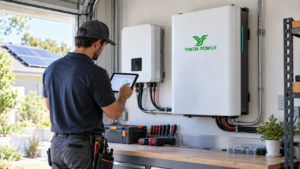
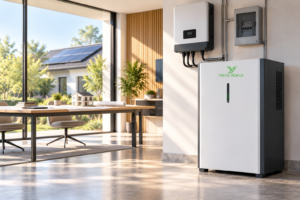
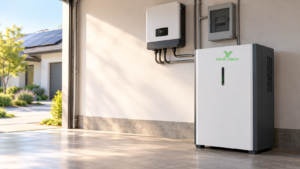
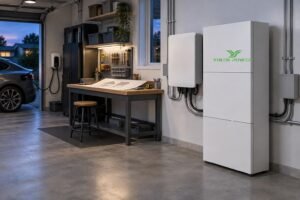
Low voltage residential energy storage batteries are not selected by capacity alone. For a distributor, installer, or OEM buyer, the practical question is whether the battery format, inverter interface, protection design, and installation plan fit the target home and market. A compact wall-mounted unit may suit a retrofit with limited wall space, while a floor-standing or tower configuration may be better for a household that expects to add storage as its solar use grows.
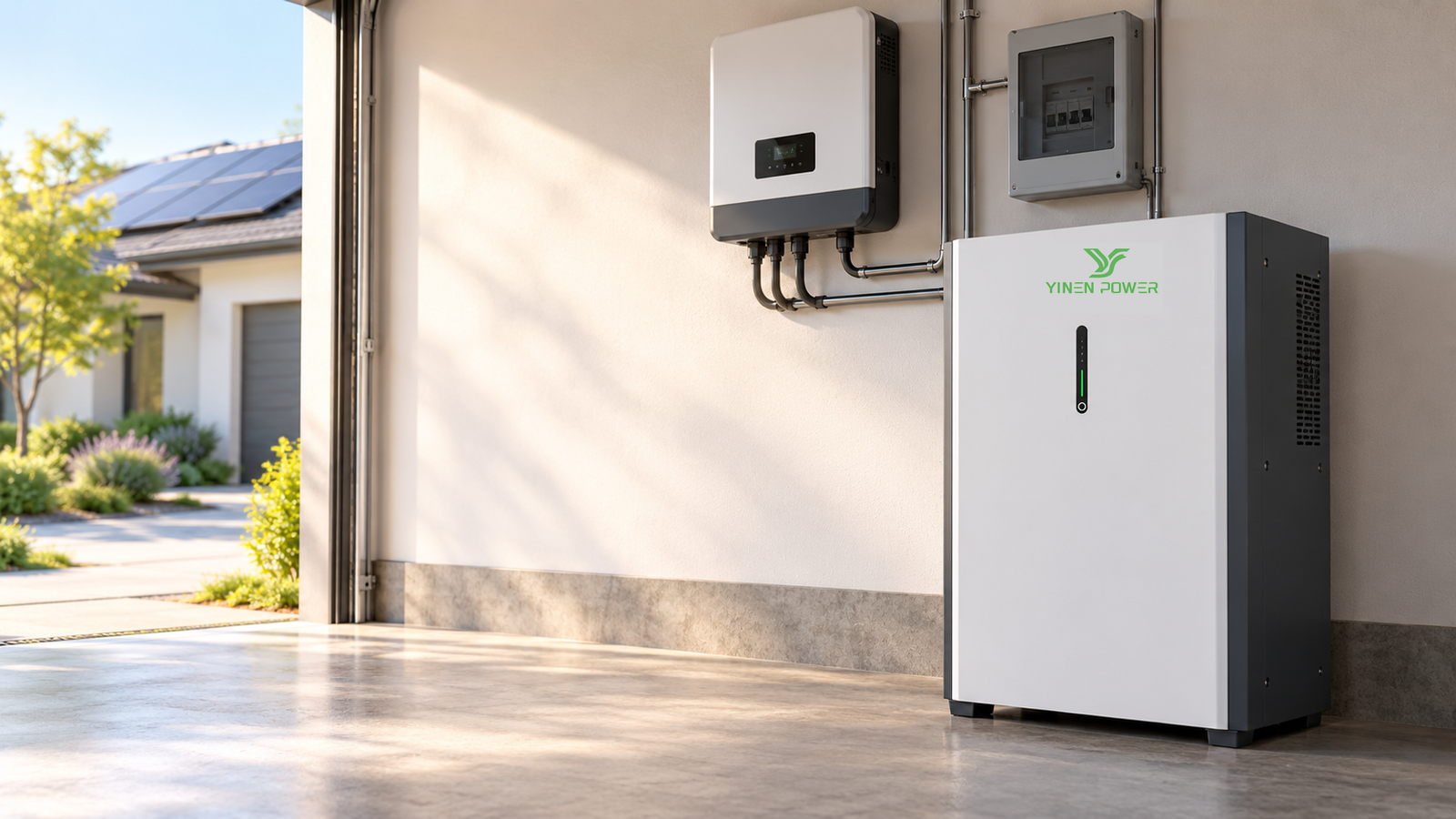
Why Battery Format Matters in Residential Storage
Low voltage residential energy storage batteries come in formats that affect more than appearance. It changes the available installation location, service access, cable route, weight distribution, expansion path, and the way an installer plans the inverter and protection equipment. A quotation that gives only a kWh number can leave these project questions unanswered.
For example, an installer planning a solar retrofit in a narrow utility room may prioritize a wall-mounted battery that leaves floor access clear. A new-build home with a dedicated plant area may instead have room for a floor-standing or tower battery. These are illustrative planning situations, not promises that any particular configuration will fit every site.

Low Voltage Residential Energy Storage Batteries: YINEN Product Directions
YINEN POWER offers residential LiFePO₄ battery options and home energy solutions for projects that need a complete solar-and-storage discussion. The figures below identify product directions from the supplied catalog; the final voltage, usable energy, parallel arrangement, and market documents must be checked against the current model datasheet and project quotation.
| Product direction | Catalog configuration | Where it can fit | Confirm before quoting |
|---|---|---|---|
| HA Pro wall-mounted battery | 5.12 kWh; 25.6 V 200 Ah or 51.2 V 100 Ah | Space-sensitive residential retrofits and compact solar-storage layouts | Wall structure, service clearance, inverter voltage range, current limits, and communication setup |
| HH Pro floor-standing battery | 8.0384 kWh; 25.6 V 314 Ah | Utility rooms or other locations with suitable floor space | Site dimensions, floor condition, cable routing, protection design, and environmental limits |
| HF Pro Max tower battery | 14.336 kWh or 16.076 kWh; 51.2 V | Projects seeking a higher-capacity residential storage direction | Inverter compatibility, space for service, permitted expansion arrangement, and installation instructions |
| Integrated home ESS | Catalog options combine an inverter and LiFePO₄ battery | Projects that prefer a coordinated equipment package | AC output, PV input, backup behavior, communications, and the exact supplied configuration |
The table is a starting point, not a substitute for engineering. Battery-side voltage is only one part of the decision. The selected inverter, continuous and surge loads, battery current limits, BMS communication, and installation rules determine whether a proposed system can operate as intended.
For wider context on battery storage in energy systems, see the IEA report on batteries and secure energy transitions.

Plan the Battery, Inverter, and Backup Circuits Together
For low voltage residential energy storage batteries, plan the battery, inverter, protection equipment, and intended AC circuits as one system. A low-voltage battery normally works as part of a system. The battery management system supervises battery conditions; the inverter manages conversion and operating logic; and the electrical installation provides isolation, overcurrent protection, and the intended AC circuits. Matching nominal labels alone does not confirm that two products will communicate or operate within their permitted limits.
If the homeowner expects backup during an outage, ask which circuits need support and whether the inverter, wiring, and transfer arrangement are designed for that job. A battery is not automatically whole-home backup. Refrigeration, lighting, network equipment, pumps, air conditioning, and cooking loads can create very different power and energy requirements.
- Energy in kWh: helps estimate how long selected loads may run.
- Power in kW: helps determine which loads can run at the same time.
- Current limits: affect the battery-to-inverter connection and permitted charge and discharge behavior.
- BMS communication: allows compatible equipment to exchange operating limits and alarms.
- Backup wiring: determines whether selected loads are connected to a supported backup output.
What a Distributor or Installer Should Ask Before Selecting a Format
A reliable proposal for low voltage residential energy storage batteries begins with site information rather than a preferred cabinet shape. The following checklist helps a sales or technical team turn an initial lead into a configuration discussion with fewer assumptions.
- Target country or region and any required market documents for the exact model.
- Existing PV array, inverter make and model, and the intended grid-connected, off-grid, or backup operating mode.
- Essential-load list, simultaneous demand, motor-starting loads, and desired backup duration.
- Proposed installation photos, available dimensions, wall or floor conditions, ventilation, and cable route.
- Future expansion plan, including whether the owner expects additional PV, EV charging, or new large loads.
These inputs matter because a battery that appears appropriately sized on a brochure can still be unsuitable when the inverter cannot supply the required simultaneous load, the proposed wall cannot carry the equipment, or the local installation rules require a different layout. Treat each quotation as a documented scope rather than a universal package.
OEM and Project Customization: Define the Scope First
For OEM or private-label discussions, define the commercial and technical boundary before discussing branding. Explain which part of the project needs customization: battery format, voltage direction, interface, system packaging, documentation, or product appearance. Then confirm what can be supplied for the selected configuration and destination market.
YINEN POWER can begin with the application, existing equipment, and target product direction. The practical handoff is a concise requirement sheet: target market, expected annual volume, preferred configuration, inverter interface, installation scenario, branding request, and documentation requirements. Model-specific compliance documents, warranty terms, lead time, MOQ, and final compatibility should be confirmed during the quotation process rather than inferred from this article.

Frequently Asked Questions
Is 48 V the same as 51.2 V for a residential battery?
They are common nominal labels in low-voltage storage discussions, but they do not establish compatibility by themselves. Compare the actual operating voltage range, permitted charge and discharge current, charging settings, communication protocol, and published compatibility information for the exact battery and inverter models.
Can a low-voltage battery support an entire home?
It depends on the home’s simultaneous load, starting demand, inverter output, battery discharge capability, and backup-circuit design. Some projects back up selected essential circuits rather than every household load. A qualified installer should calculate the real duty instead of relying only on the battery’s nameplate capacity.
Can a homeowner add capacity later?
Only when the specific battery series, inverter, and installation design permit it. Confirm the supported parallel arrangement, firmware requirements, protection changes, physical space, and any rules for combining batteries before the first installation is finalized.
Which documents should a buyer request?
Ask for the exact model datasheet, installation manual, compatibility information, and market-specific documents needed for the project. The relevant documents and requirements can vary by configuration and destination, so they should be reviewed before purchase and installation.
How to Specify Low Voltage Residential Energy Storage Batteries
The most useful low voltage residential energy storage batteries are the ones that fit the site, load profile, inverter, and long-term plan. If you are planning a residential solar-storage project, share the site location, expected loads, existing solar equipment, desired backup behavior, and installation conditions with YINEN POWER. We can discuss an appropriate product direction and the information needed to evaluate the complete configuration.
Plan a low-voltage residential storage project with YINEN POWER. Send your inverter details, load target, installation conditions, and destination market to start a scope-focused discussion.