An expandable home battery system can help a larger household build solar storage around current needs without assuming that every future appliance must be covered on day one. The practical question is not simply how many kilowatt-hours to buy. It is whether the system can deliver the required power, fit the available space, and expand through an approved configuration when the household’s energy use changes.
For homeowners and installers, expansion planning is especially useful where future demand may include an electric vehicle, heat pump, additional air conditioning, or a changing backup requirement. This guide explains how to define an expandable home battery system around real loads, site constraints, and documented interfaces.
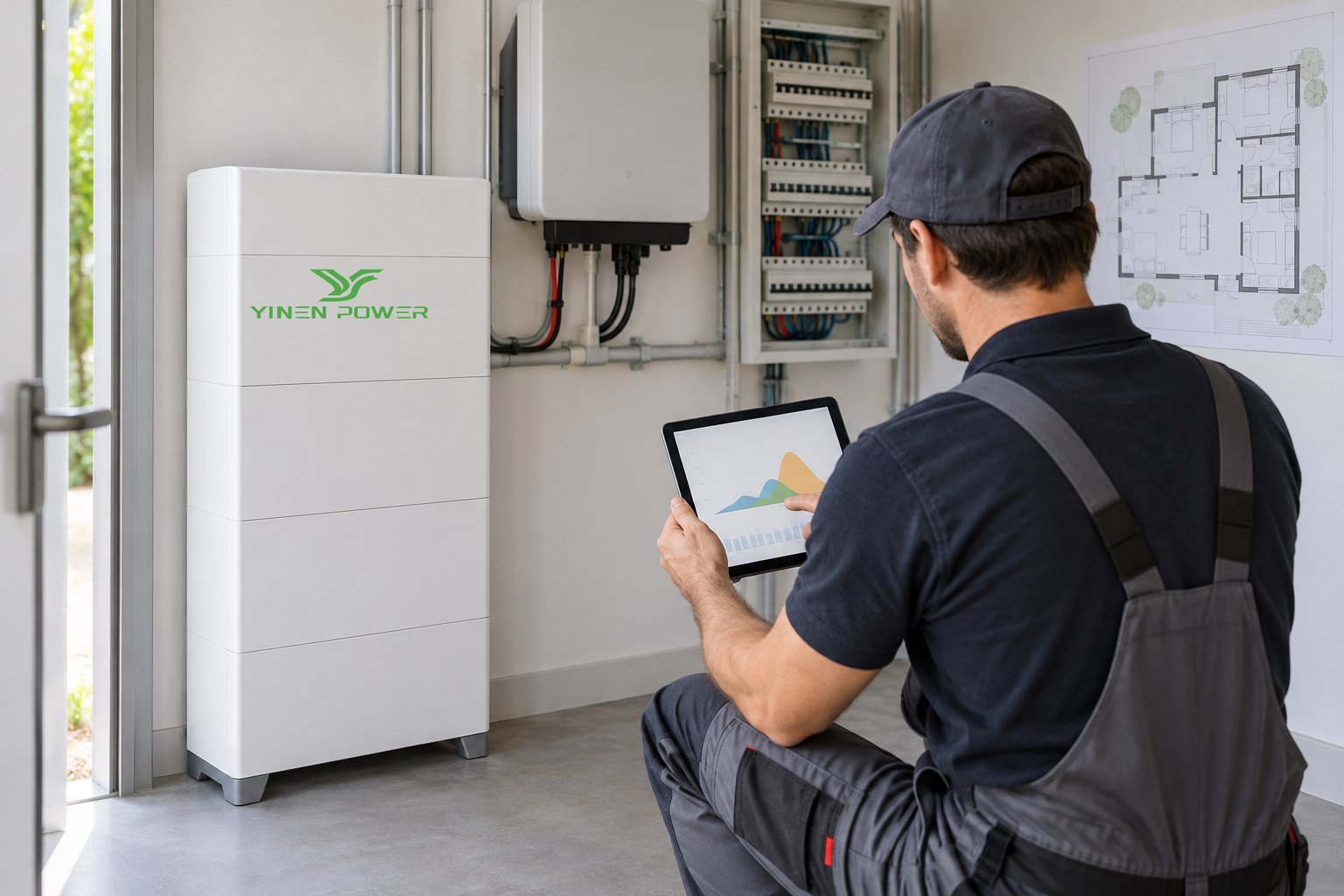
Why large households should separate today’s needs from future demand
Buying the largest battery available can create an oversized project if the system is designed around a future that may not arrive. Equally, choosing only the smallest initial capacity can leave no practical way to expand later. Start with the household’s current energy pattern, then record possible changes separately.
Review the evening load, daytime solar surplus, simultaneous appliance demand, and the circuits that should remain available during an outage. These inputs make a supplier quotation more comparable than a capacity number alone.
| Planning input | Why it matters | Question to answer |
|---|---|---|
| Daily energy use | Helps estimate how much stored energy may be useful. | Which hours have the highest household demand? |
| Simultaneous load | Defines inverter and battery discharge-power needs. | Which appliances may run at the same time? |
| Backup priority | Prevents every circuit being treated as critical. | Which loads must operate during a grid event? |
| Future equipment | Creates a documented expansion assumption. | Could EV charging, heating, or cooling change the profile? |
Power and energy are different expansion questions
Energy capacity affects how long selected loads can be supported. Power affects how much equipment can be supplied at one time. Adding battery modules may increase usable energy, but it does not automatically change the power limit of the inverter, the site protection arrangement, or the allowed operating configuration.
Ask for the initial and future configuration in writing. The response should distinguish battery-module quantity, usable-energy basis, charge and discharge power, inverter limit, protection equipment, and control scope. For larger capacity planning, see our 25kWh home battery system sizing guide.
Six checks before choosing a modular battery format
- Approved expansion path: confirm which module combinations are supported for the proposed system.
- Inverter and BMS interface: request model-level compatibility and the planned communication arrangement.
- Physical footprint: reserve clearance, cable routing, access, and maintenance space for the intended end state.
- Electrical limits: check protection, conductor sizing, and site constraints against the future configuration.
- Commissioning process: identify who validates the expanded configuration and updates system settings.
- Support records: keep installation documents, serial information, configuration records, and alarm history available.

Plan a compact installation without sacrificing access
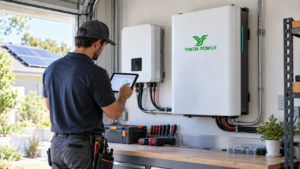
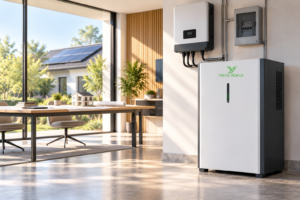
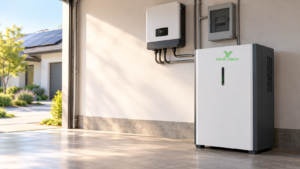
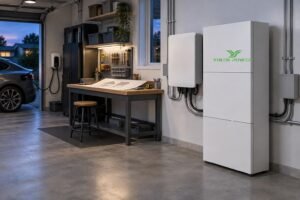
A compact battery installation is not simply a smaller cabinet. The final layout needs space for safe installation, inspection, ventilation where specified by the equipment documentation, cable management, and future service. A neat initial installation can become difficult to maintain if the battery, inverter, meter, and disconnect equipment are placed without access boundaries.
Use the proposed end-state footprint during the first site survey. This lets the installer identify where future modules, protection equipment, or cable pathways would go before walls, shelving, or finished surfaces limit the layout.

When to expand: use evidence from household operation
Expansion should be based on operating records rather than guesswork. After commissioning, review solar production, battery state of charge, import periods, export periods, and events where a load or reserve requirement was not met. These records show whether additional usable energy, higher output power, or a changed control setting would address the issue.
A family that adds an EV may see a different evening profile from a household that adds a heat pump. The correct response could be a revised charging strategy, a different backup boundary, or an approved battery expansion. It should not be assumed from one electricity bill alone.
Compare an initial system and a staged system fairly
| Comparison point | Initial system | Staged expansion plan |
|---|---|---|
| Operating scope | Defined around current loads and objectives. | Defines current scope plus documented future assumptions. |
| Site design | Requires safe installation and service access. | Also reserves physical and electrical space for the approved end state. |
| Equipment interface | Confirmed for the initial configuration. | Confirms how later modules and controls will be validated. |
| Decision timing | Capacity is selected at installation. | Later capacity decisions use operational data and site review. |
Questions to include in a home battery RFQ
- What loads, operating hours, and backup circuits are in scope?
- What are the initial battery, inverter, and control components?
- Which expansion configurations are approved for this equipment combination?
- What electrical, space, access, and commissioning changes would an expansion require?
- Which documents and contacts are needed for future support?
For a broader comparison of equipment and backup planning, review our home battery alternatives guide. It helps homeowners and installers compare system scope before treating expansion as a standalone purchase.
Frequently asked questions
Can every home battery be expanded later?
No. Expansion depends on the exact battery architecture, compatible inverter, control equipment, documentation, and installation conditions. Confirm the proposed expansion route before purchase.
Does adding battery capacity increase backup power?
Not necessarily. Additional energy can change runtime, while the available output power may still be limited by the inverter, battery configuration, protection devices, and selected operating mode.
Should a household install all future capacity immediately?
Not always. A staged plan can be useful when future demand is uncertain, provided the site, interfaces, and approved configuration are planned from the beginning.
Build an expandable plan around the real home
An expandable home battery system should be selected as a complete residential energy design: loads, power, usable energy, controls, space, and support documentation all matter. YINEN POWER can help homeowners and installers discuss a clear solar-storage scope for the initial installation and future review.
Talk with YINEN POWER about your home solar storage requirements.