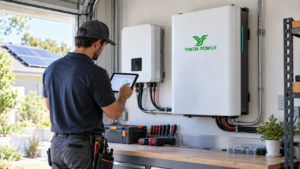
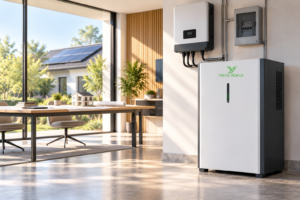
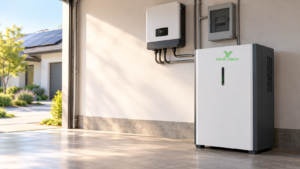
Choosing between single-phase vs three-phase solar inverters is not simply a question of system size. The right choice depends on the grid supply at the site, the loads that must run, local utility requirements, and the expansion plan for the next several years. A well-matched inverter supports stable operation, easier permitting, and a cleaner path to battery storage or larger solar capacity.
This guide explains the practical differences and gives you a project-first way to make the decision.

What is a single-phase solar inverter?
A single-phase inverter converts DC power from solar modules into AC power for a single-phase electrical service. It is commonly used in smaller homes, apartments, small retail spaces, and light-load applications where the utility connection is single phase.
- Usually suited to lower-demand sites and simpler distribution boards.
- Often straightforward to install when the existing service is already single phase.
- Can be a practical choice when major motor loads, workshops, or large HVAC equipment are not part of the scope.
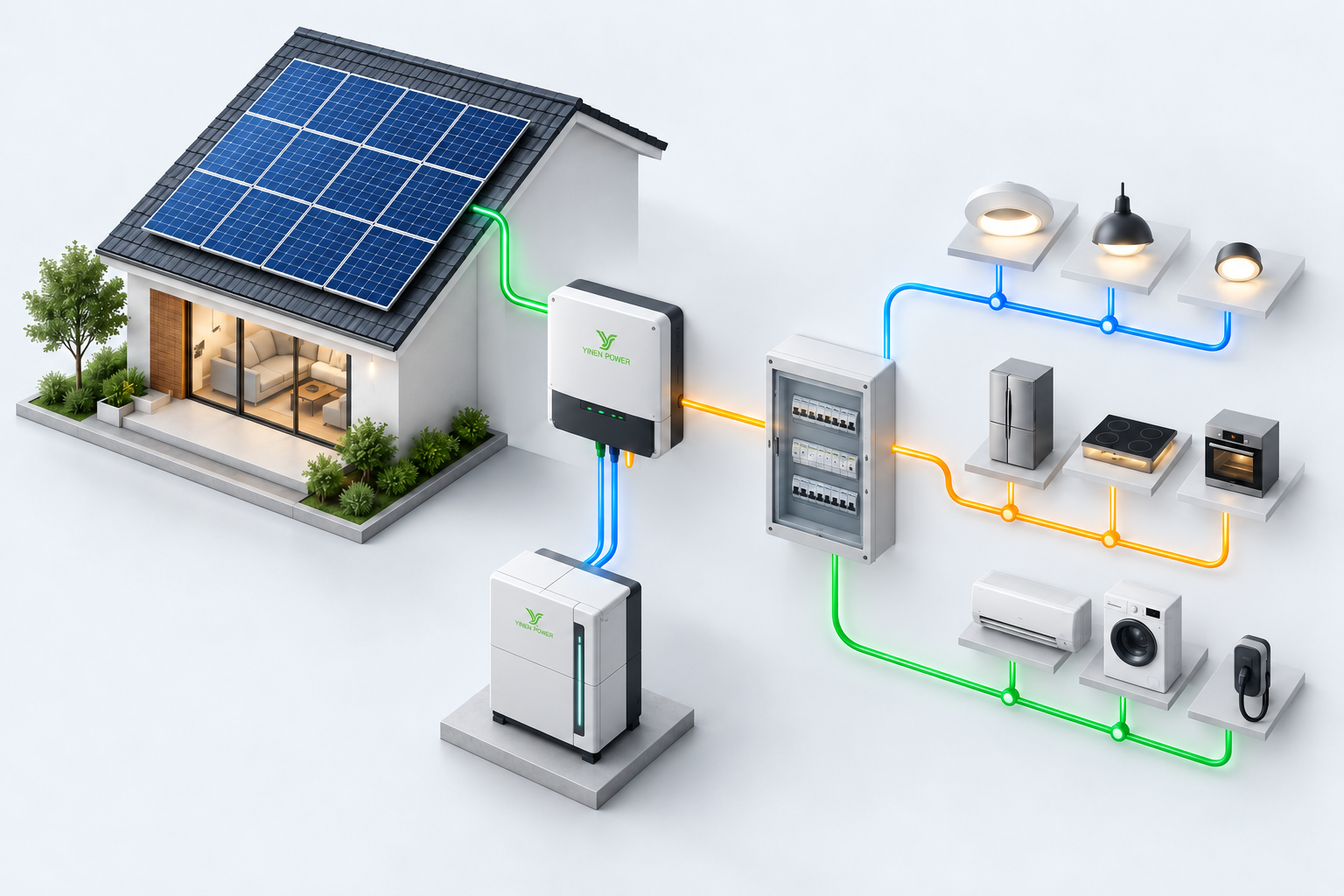
For home projects that also need backup or self-consumption, the inverter selection should be coordinated with the battery voltage, usable capacity, and essential-load panel. See our home battery energy storage solutions for the related system considerations.
What is a three-phase solar inverter?
A three-phase inverter supplies power across three AC phases. It is normally used where the building has three-phase service, where loads are larger, or where balancing across phases is important. Typical applications include villas with high electrical demand, commercial premises, farms, workshops, and light industrial facilities.
- Designed for sites with three-phase utility service.
- Better suited to larger demand profiles and equipment such as pumps, compressors, and larger HVAC systems.
- Helps distribute generation and consumption more evenly across phases when the site wiring is designed for it.
Three-phase does not automatically mean “better.” It is only correct when it matches the grid connection and the actual load plan.
Single-phase vs three-phase solar inverters: key differences
| Decision point | Single-phase inverter | Three-phase inverter |
|---|---|---|
| Grid connection | Single-phase service | Three-phase service |
| Typical use | Homes and lighter loads | Larger homes, commercial sites, farms, workshops |
| Load planning | One phase carries the AC output | Output is distributed across three phases |
| Expansion path | Best when future demand remains modest | Better suited to higher future demand and phase-balanced loads |
| Design priority | Simple match to an existing single-phase supply | Correct phase allocation, protection, and commissioning |
Always confirm the allowable export limit, protection requirements, and interconnection rules with the local utility and installer before finalizing equipment.
Start with the electrical service, not the product catalogue
The first check is the incoming electrical service. Look at the main distribution board, service documentation, and meter arrangement. If the property is single phase, adding a three-phase inverter is usually not a shortcut to more solar power. If the property is three phase, a single-phase inverter may still be possible in some cases, but it must satisfy local limits and should not create an avoidable phase imbalance.
Record these details during the site survey:
- Nominal voltage and phase type at the point of connection.
- Main breaker and cable ratings.
- Existing PV, generator, and battery equipment.
- Largest continuous loads and motor starting loads.
- Whether future loads such as EV charging, heat pumps, irrigation pumps, or additional air conditioning are planned.
Match inverter choice to the load profile
Solar production is only one side of the design. The inverter must also work with the way energy is consumed. A home with lighting, electronics, and modest air conditioning has a very different profile from a site with a pump, refrigeration, welding equipment, or several large motors.
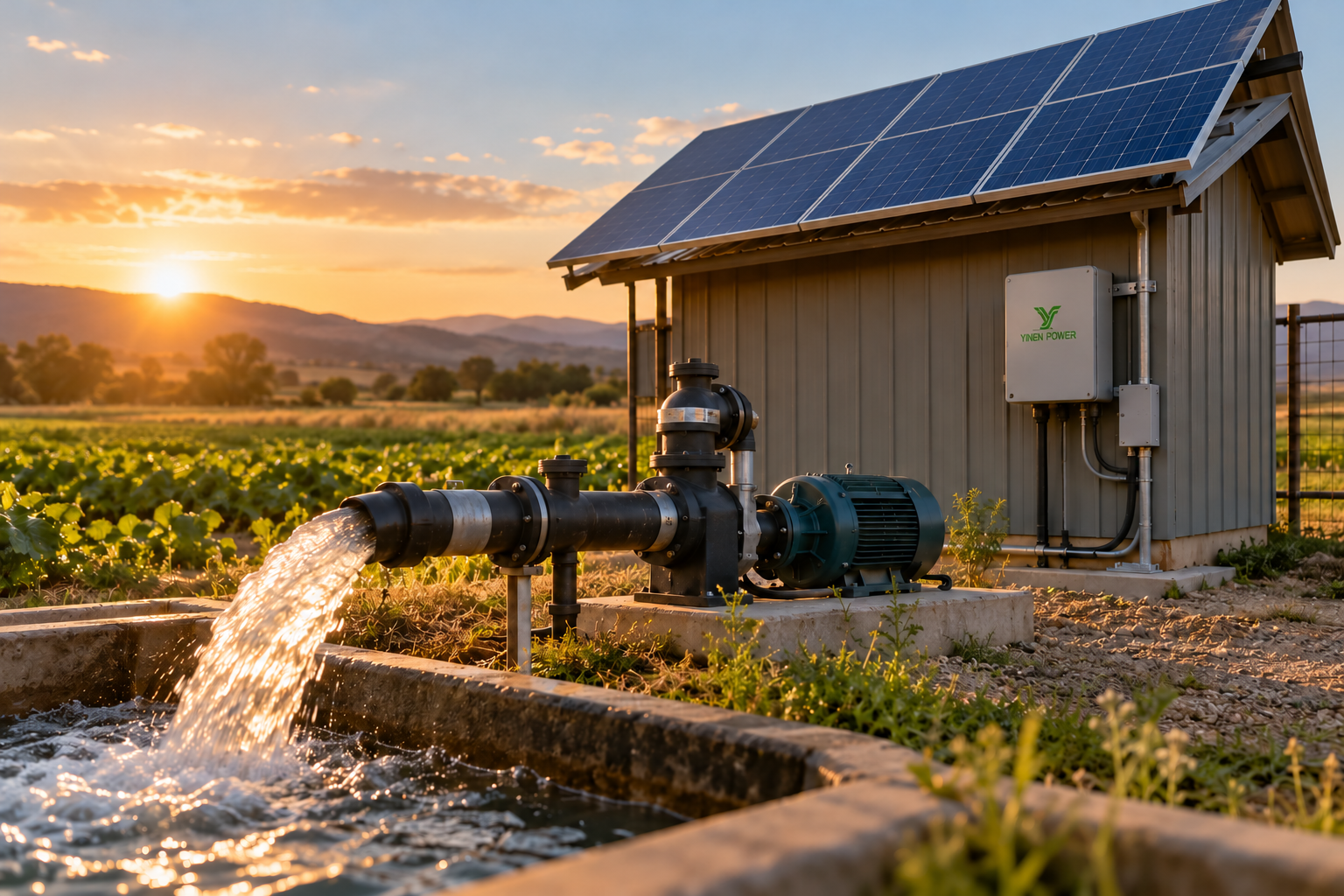
For motor-driven loads, note the running power and the starting behavior. A pump or compressor may draw significantly more current during startup than during normal operation. Check the inverter’s surge capability, control strategy, cable sizing, and protective devices as part of one coordinated design. For irrigation-oriented planning, our solar pump sizing guide explains the field measurements that matter.
Plan for batteries and future expansion
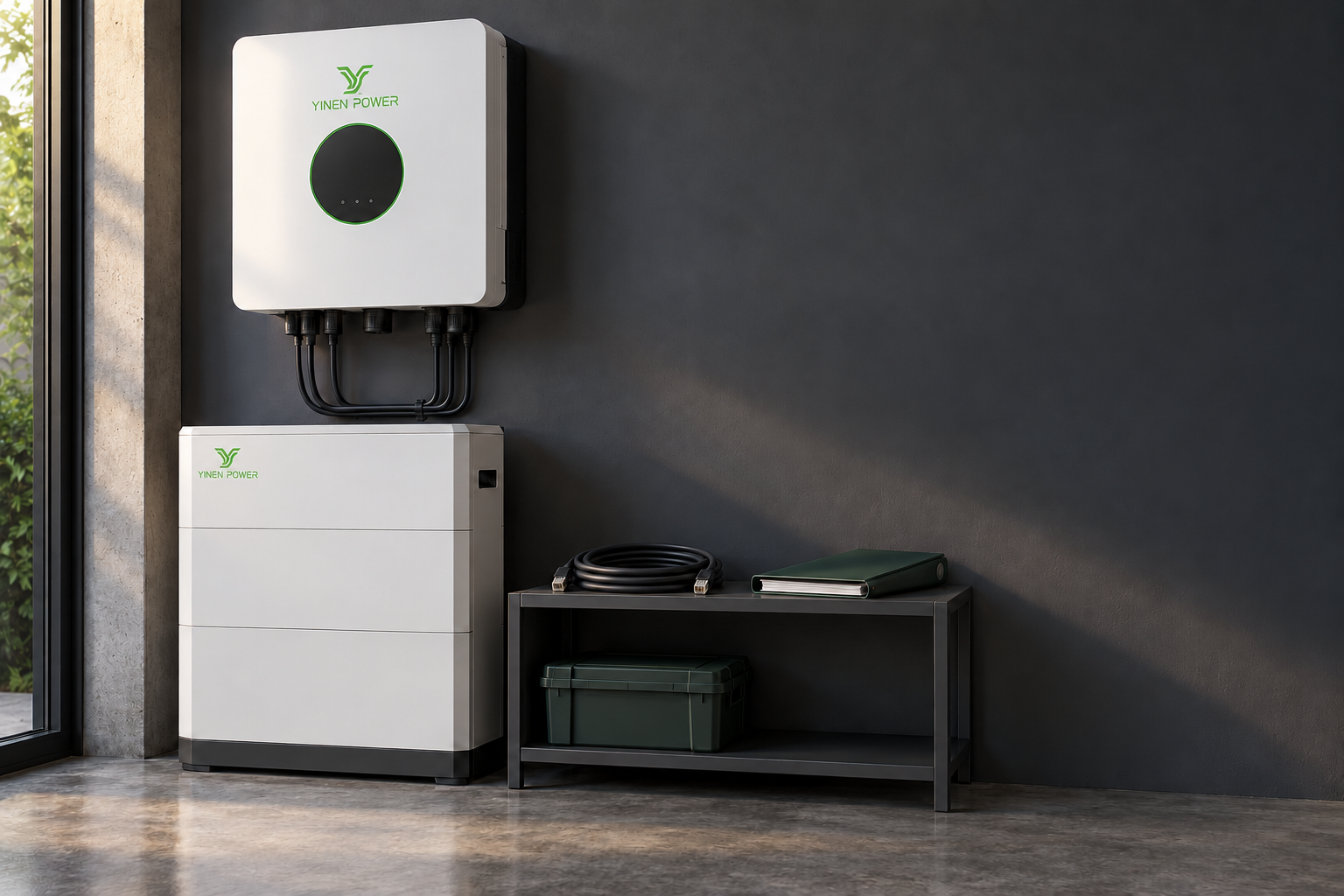
Adding battery storage changes the design conversation. The inverter must support the intended battery architecture and the site’s backup priorities. Define which circuits need to stay on during an outage, how much energy they use overnight, and whether high-power loads will be excluded from backup.
For a commercial site, the goal may be daytime peak shaving, self-consumption, or resilience for selected circuits. For homes, the focus is often evening solar use and essential-load backup. Explore commercial and industrial energy storage applications when the project includes a larger load profile or staged expansion.
Common specification mistakes to avoid
- Choosing by panel wattage alone: DC array size is important, but the grid connection and load profile determine whether the AC side is appropriate.
- Ignoring phase balance: A three-phase site should be assessed phase by phase, especially where large uneven loads are present.
- Forgetting motor startup: Running power does not tell the whole story for pumps and compressors.
- Assuming all backup loads can run together: Create a priority list and calculate the realistic simultaneous demand.
- Leaving expansion until later: Reserve electrical space and choose an architecture that can grow without an expensive redesign.
A practical selection workflow
- Confirm the utility supply: single phase or three phase.
- Measure the existing and expected load profile.
- Identify motor loads, surge requirements, and critical circuits.
- Define PV capacity, export requirements, and battery goals.
- Check inverter operating windows, protections, communications, and local approvals.
- Document the design and commissioning plan before ordering equipment.
FAQ
Can a single-phase inverter be used on a three-phase property?
Sometimes, but it depends on local utility rules, export limits, and the expected phase balance. It should be evaluated as a site-specific design decision rather than a default.
Do three-phase inverters always cost less over time?
Not automatically. They can be the more appropriate solution for the right load profile, but the total project cost also includes wiring, protection, installation, permitting, and any battery integration.
What information should I send for a quotation?
Share the utility phase type, voltage, recent electricity use, main loads, location, PV target size, and whether backup or battery storage is required. This allows a system design to be matched to the real project rather than estimated from a single number.
Choose the inverter around the project, not the label
The best choice is the one that matches the electrical service, real load behavior, future expansion plan, and local grid rules. YINEN POWER can help you assess these inputs and build a practical solar and storage solution for residential, commercial, and off-grid applications. Contact our team to discuss your project requirements.