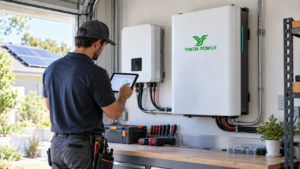
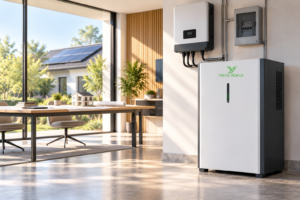
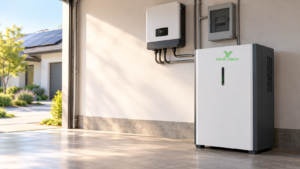
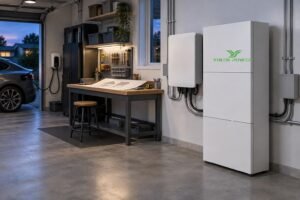
A battery is only one part of a storage project. A Battery Energy Storage System (BESS) combines batteries with power conversion, protection, controls, thermal design, and site integration so stored electricity can be used when it is needed. If you are evaluating solar-plus-storage, backup power, or commercial load management, understanding that system boundary is the first step toward a meaningful comparison.
What Is BESS?
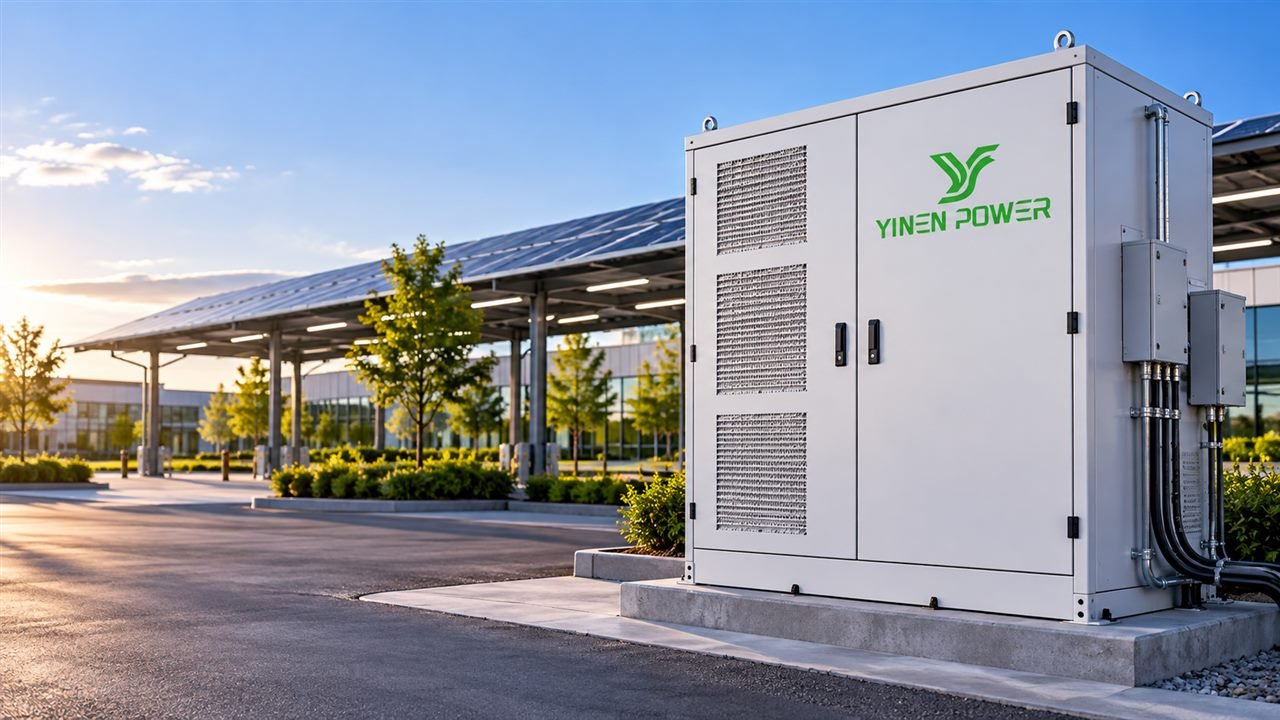
BESS stands for Battery Energy Storage System. It stores electrical energy in batteries and releases it later according to a defined operating strategy. A BESS may charge from solar PV, the grid, a generator, or another compatible source. When power is required, the system supplies energy to selected loads or to the connected electrical network through suitable conversion and protection equipment.
That definition matters because a “BESS battery” is not a complete project description. A usable solution also has to account for power, energy capacity, battery controls, inverter or PCS configuration, communication, protection, installation environment, and the site’s loads. The right configuration is therefore determined by the job the system must perform—not by a battery capacity figure alone.
How Does a Battery Energy Storage System Work?
In a solar-plus-storage arrangement, PV generation is normally converted and routed to serve loads first or according to the site’s control strategy. Available energy can then charge the battery. The battery stores energy as DC. When the system discharges, a compatible inverter or power conversion system changes that DC energy into AC power for the load or grid connection.
The sequence is supervised by controls rather than left to the battery alone. The battery management system observes battery operating conditions, while higher-level control can schedule charge and discharge windows, respond to load conditions, maintain a reserve for backup, or coordinate with an approved grid connection. The exact control hierarchy depends on the quoted equipment and project design.
The Core Components of a BESS
A buyer should request a clear equipment boundary for every quotation. The labels below help distinguish the functions that must work together.
| Component | Role in the BESS | Buyer check |
|---|---|---|
| Battery cells, modules, or racks | Store the electrical energy. | Confirm usable energy, voltage architecture, installation format, and current model documentation. |
| Battery Management System (BMS) | Monitors battery condition and enforces configured operating limits. | Confirm the BMS is supplied for the quoted system and compatible with the selected inverter or PCS. |
| Inverter or Power Conversion System (PCS) | Converts between DC and AC and manages charge/discharge power within its design limits. | Check AC output, battery voltage, PV input where relevant, grid requirements, and load starting demand. |
| Energy Management System (EMS) or controls | Coordinates the operating strategy across storage, generation, load, and grid interfaces. | Define which operating modes, monitoring functions, and communications are included. |
| Thermal, protection, and site equipment | Supports the permitted operating environment and safe installation. | Review enclosure, ventilation or thermal design, clearances, protection, cabling, and applicable local requirements. |
The U.S. Department of Energy’s BESS component overview similarly describes BESS as a collection of batteries, management, conversion, protection, and control equipment rather than a single battery product. A system quotation should make those boundaries visible before it is compared with another offer.

kW, kWh, and Duration: Three Different Decisions
Power is commonly expressed in kW and describes how quickly a system can supply or absorb energy. Energy is commonly expressed in kWh and describes how much stored energy is available over an operating window. Duration links the two: a system sized for a higher power requirement can require a different configuration from one designed for a lower power requirement over a longer period.
For example, a facility may want to support a short, high-power production load, while another wants to shift a defined amount of solar generation into the evening. Both may discuss the same battery capacity, yet need different inverter power, controls, wiring, and operating strategies. Share a load profile, critical-load list, solar data, and target operating window before selecting a configuration.
Where Does BESS Fit?
- Residential solar and backup: Store selected solar energy and define which essential loads should operate during an outage.
- Commercial and industrial sites: Coordinate selected peak periods, solar utilization, and operational resilience around the actual site load profile.
- Off-grid and weak-grid locations: Combine compatible PV, batteries, inverters, and other approved sources around an agreed reserve strategy.
- Microgrids and larger energy projects: Integrate storage, conversion, monitoring, distribution, and site controls around the project’s interconnection and operating rules.
Application labels are only a starting point. For an industrial park, the useful next question is when loads occur, how large they are, which loads are critical, and what electrical infrastructure is already present. YINEN’s industrial energy storage planning guide uses this project-first approach.
How to Compare BESS Quotes Without Missing the System
Start by placing each offer on the same project brief. A quote that looks less expensive may exclude conversion equipment, controls, installation interfaces, monitoring, or documentation required for the final design. Conversely, a larger battery does not automatically solve an undersized power, interconnection, or load-prioritization issue.
- Define the operating objective: solar self-consumption, backup, peak management, off-grid supply, or a combination.
- Separate power requirements from energy and backup-duration requirements.
- Identify sources: PV, grid, generator, and any required control or transfer arrangement.
- Check battery-to-inverter or PCS compatibility, voltage, communication protocol, and operating limits for the exact models.
- Review installation location, access, environmental conditions, electrical protection, and local approval requirements.
- Request current model-specific documents, commissioning scope, monitoring approach, and service route.
For a smaller solar and backup project, the inverter cannot be selected separately from the battery plan. Review the applicable YINEN single-phase off-grid hybrid inverter options alongside PV input, loads, battery voltage, and required backup behavior.
Why Integration and Controls Matter
A practical BESS is an energy decision tool. It needs to know when charging is permitted, when discharge should occur, how much energy should be held in reserve, and how the connected loads should behave during a grid event. Those decisions come from the project objective, not a generic operating mode.
Consider an illustrative warehouse with rooftop PV and a short afternoon demand peak. The facility manager may prioritize production loads, preserve a reserve for a brief interruption, and use selected surplus solar for storage. That scenario is not a performance promise; it simply shows why the load profile, backup priorities, and control settings must be agreed before equipment is sized.

BESS Safety and Project Readiness
Safety is a project responsibility as well as an equipment consideration. The selected model, enclosure, battery chemistry, thermal approach, protection equipment, spacing, cabling, fire strategy, installation method, and local rules should be reviewed for the actual destination and project conditions. Do not transfer documents or installation assumptions from a different model, climate, or market without confirmation.
Before a procurement decision, ask the supplier to identify what is included, which documents are available for the exact quoted model, and what must be designed or supplied at site level. This keeps the conversation focused on an implementable system instead of a generic equipment list.
Frequently Asked Questions
Is BESS the same as a battery?
No. A battery stores energy, while a BESS includes the battery plus the equipment and controls required to use that stored energy in a defined electrical system.
Can a BESS work with solar panels?
Yes, a compatible system can be designed to charge from solar PV and use stored energy later. The final approach depends on the inverter or PCS, PV configuration, grid rules, loads, and operating goal.
How do I choose BESS size?
Start with load power, energy use over time, target backup duration or operating window, generation profile, installation constraints, and the required reserve. Confirm the final configuration against the latest product documentation and project electrical design.
Plan the BESS Around Your Site
What is BESS in a real project? It is a coordinated storage system that must match your power, energy, control, and installation requirements. Share your load information, PV plan, location, backup objective, grid conditions, and target market with YINEN POWER. We can help you begin a configuration discussion for a suitable solar and energy storage solution.