A 1 MW battery storage system is not a fixed amount of backup time or a fixed number of homes. One megawatt describes the rate at which a system can deliver or absorb power at a moment in time. For commercial planning, the more useful question is: what site load must be supported, for how long, and under which operating conditions?
This guide separates MW from MWh, shows why a household-equivalent claim is only a rough communication tool, and gives EPC teams, facility managers and project buyers a practical way to build an initial storage brief.
For early-stage planning, a 1 MW battery storage system should be evaluated with local electrical requirements and a qualified design team. The U.S. Department of Energy energy storage resources provide broader context before project-specific engineering begins.
What Does 1 MW Mean?
One megawatt equals 1,000 kilowatts, or 1,000,000 watts. It is a power measurement, so it describes the scale of an instantaneous electrical flow rather than the quantity of energy stored. A 1 MW power-conversion system may be relevant when a facility needs to reduce a defined demand peak, support a selected group of loads, or coordinate solar generation and storage at a commercial site.
MW should always be read alongside the planned electrical interface, operating mode, local interconnection requirements and the load profile. A nominal rating alone does not prove that every site load, motor start or transfer scenario is covered. A 1 MW battery storage system still needs a site-specific power and protection review.
MW, MWh and Runtime: Read the Units Together
MW tells you how much power the system can provide or accept at one time. MWh tells you how much energy can be stored or discharged over time. A simple planning relationship is:
Runtime (hours) ≈ usable energy (MWh) ÷ discharge power (MW)
Real operation also depends on the battery operating window, conversion losses, auxiliary consumption, dispatch strategy and site constraints. Use the calculation as an early planning check—not as a final guarantee. A 1 MW battery storage system must pair its MW rating with a verified usable-energy target. For a deeper runtime framework, see YINEN POWER’s 1MWh commercial battery runtime guide.
| Term | What it measures | Commercial planning question |
|---|---|---|
| kW | Smaller power scale | What equipment or load group is being measured? |
| MW | Instantaneous power rate | How much site demand must the system support at once? |
| kWh | Smaller energy quantity | How much energy is used or stored during a period? |
| MWh | Large energy quantity | How long can the selected dispatch plan continue? |
Why “How Many Homes?” Is Not a Design Method
A household comparison can help a general audience visualize scale, but it changes with household demand, climate, appliance use, time of day and local electricity patterns. It also overlooks the central commercial issue: a business does not operate like an average home.
For a warehouse, factory, retail site or charging location, use interval meter data and a critical-load list instead. A site can have modest daily energy use but a high short-duration demand peak; another can have a lower peak but require several hours of continuity. These situations call for different power-to-energy relationships even if both are described informally as “1 MW projects.”
Turn a 1 MW Concept into a Site Load Brief
Before comparing a 1 MW battery storage system proposal, write down the operating goal. Do you want to reduce demand peaks, retain more solar generation on site, support critical loads, manage charging demand, or build a staged microgrid? The goal determines the data your engineering team needs next.
- 15-minute or shorter interval load data, where available;
- utility tariff periods and demand-charge rules;
- solar PV production profile and planned expansion;
- critical-load priority, required duration and restart behavior;
- site voltage, point of connection, space, access and cable route;
- future loads such as production equipment or EV charging.
For example, a facility manager may see several brief peaks each afternoon. That is not automatically a reason to specify more energy. A 1 MW battery storage system may need a different MWh rating than a backup-led project. First check the peak magnitude, duration, recurrence and recharge window; then determine whether the project needs more MW, more MWh, or a different operating schedule.
Choose a Scalable System Architecture
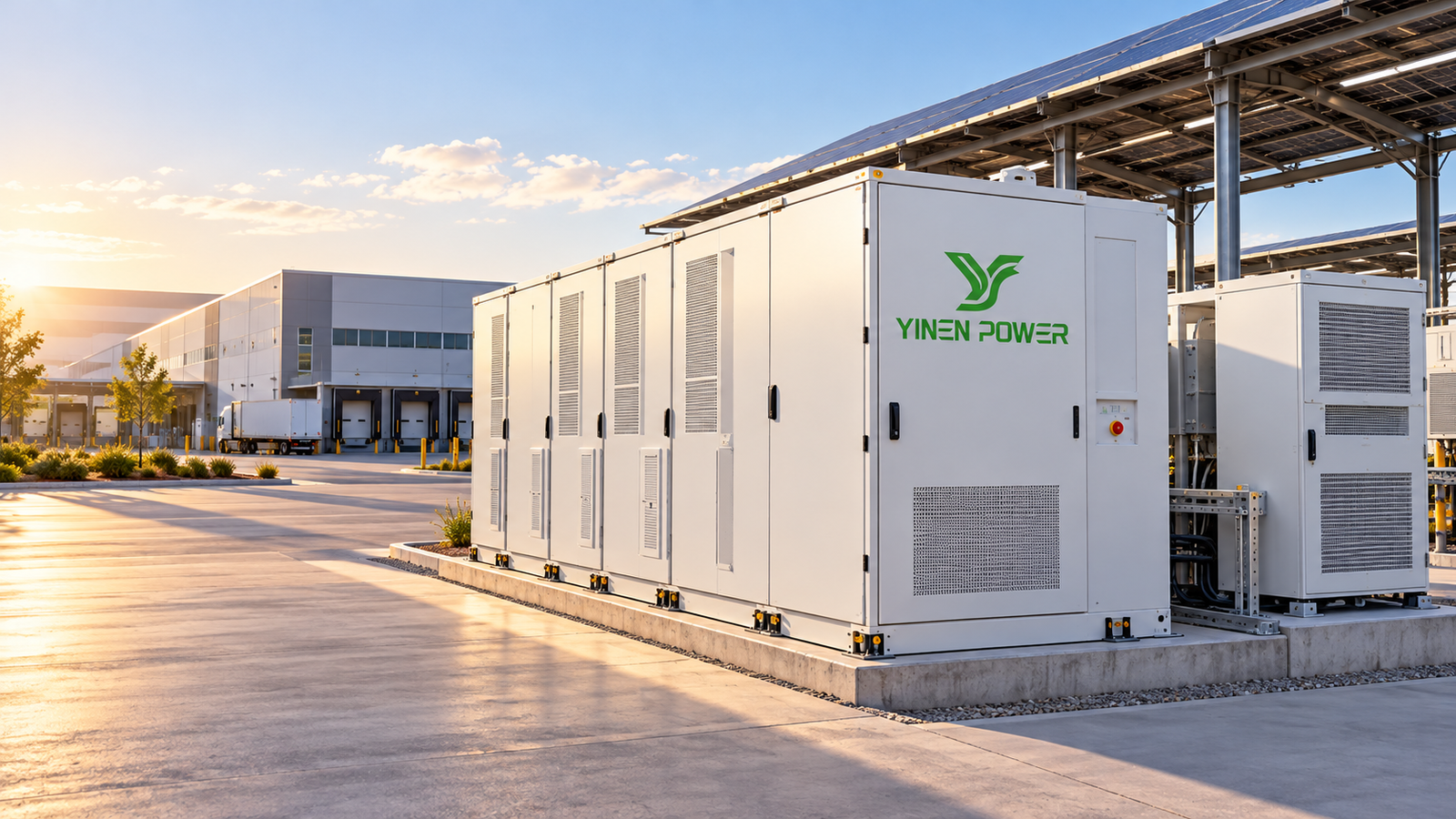
Commercial projects can be developed in phases rather than treated as a single cabinet decision. A 1 MW battery storage system should also allow for documented expansion and service access. Equipment grouping, cooling strategy, PCS configuration, controls and service access should follow the verified site plan. Start with published product data, then confirm the final arrangement with the current factory documentation and applicable local requirements.
YINEN POWER’s Transit Area Energy Storage Series presents published modular configurations for commercial project planning. For sites that combine PV conversion and storage in one equipment direction, review the photovoltaic and storage integrated machine range. Neither page replaces project-specific electrical design.
Questions to Put in a 1 MW Storage RFQ
A useful RFQ makes suppliers respond to the same project boundary. It should distinguish what is included in the battery system, power conversion, controls, protection, installation work, civil preparation, testing and commissioning.
- What power must be available at the site interface?
- What usable-energy target and operating window are required?
- Which loads are essential, flexible or excluded?
- Which grid, PV, generator or charging interfaces must be coordinated?
- What does the site provide, and what does the supplier include?
- How will acceptance testing verify the agreed operating mode?
FAQ: 1 MW Battery Storage System Planning
Is 1 MW the same as 1 MWh?
No. MW describes power; MWh describes energy. A project can combine 1 MW power with different energy capacities depending on its required operating duration and dispatch strategy.
Can a 1 MW system power a business by itself?
Only after the site load, electrical interface, operating mode and duration are confirmed. Treat the 1 MW value as one part of the design brief, not a complete system description.
What information should be shared for an initial review?
Send your load profile, target application, PV plan, site voltage, location, desired operating window and expected expansion path. Contact YINEN POWER to discuss a commercial storage configuration around verified project inputs.