Choosing a solar pump inverter starts with the water service you need—not simply the inverter label or the pump’s kW rating. For irrigation, deep-well lifting, livestock water or remote transfer, the controller must coordinate the PV array, motor and hydraulic load as sunlight changes through the day.
Before comparing models, define daily water volume, delivery pressure, operating window and the availability of a water tank or backup power. Those site facts make selection more reliable and keep the project focused on useful water output rather than nameplate assumptions.
What Does a Solar Pump Inverter Do?
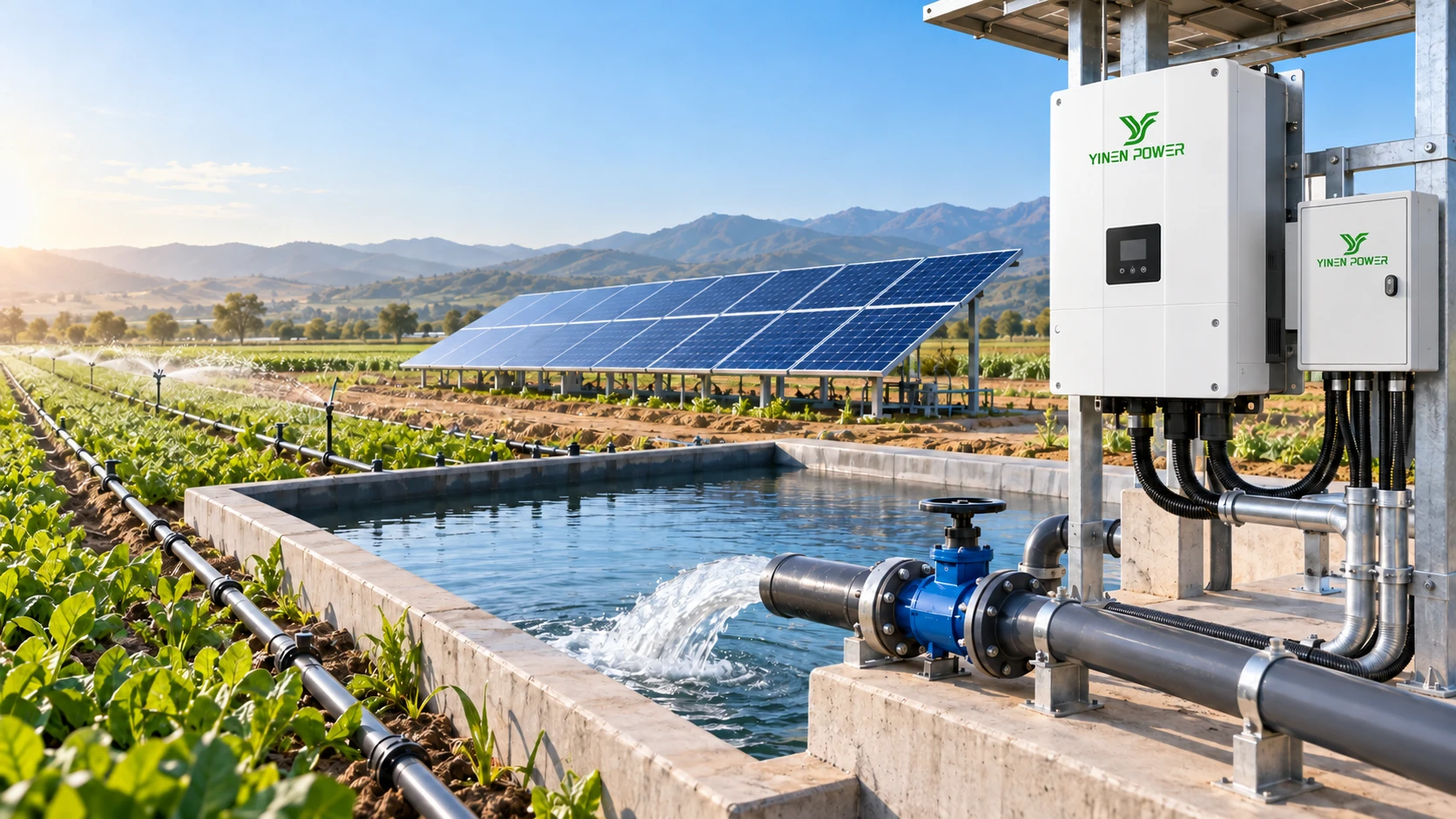
A solar pump inverter converts and controls PV power so a compatible pump motor can operate within its electrical limits. It normally tracks the power available from the array and adjusts motor speed as irradiance changes; it does not promise the same flow at every moment of the day. If you are adapting an existing AC pump, confirm the motor phase, voltage, frequency, starting behavior and pump curve. Start with this solar pump sizing guide when you need a practical way to collect the hydraulic data first.
Start With Water Demand and Total Dynamic Head
Pump power alone is not enough for solar pump inverter sizing. Total dynamic head combines vertical lift, the pumping water level, friction through pipework and fittings, plus any pressure required at the outlet. Two pumps with the same motor rating can need very different PV and inverter selections when their pipe runs, water levels or delivery points differ.
Collect these project inputs before requesting a selection:
• required daily and peak water volume;
• static and pumping water levels;
• elevation at the destination and required outlet pressure;
• pipe material, diameter, length and major fittings;
• pump nameplate data and, when available, its pump curve.
Match the PV Array Voltage to the MPPT Range
The PV string must remain inside the inverter’s permitted DC input and MPPT operating range under the site’s real temperature conditions. That means checking module open-circuit voltage in cold weather as well as operating voltage when the modules are hot. Array configuration, cable length and shading all affect the power the controller can use. An MPPT solar pump inverter should be selected around the whole electrical window, not only a nominal panel voltage.
Choose Control and Protection Functions That Fit the Site
Look for functions that match how the water system is operated: soft starting, adjustable speed, dry-run detection where supported, water-level or tank control options, restart behavior and clear fault monitoring. Electrical protections should suit the installation design as well. For an existing motor, use phase and supply requirements as a checkpoint; our comparison of single-phase vs three-phase solar inverters explains why the supply arrangement must be verified before equipment is specified.
Select by Application, Not by One Generic Rating
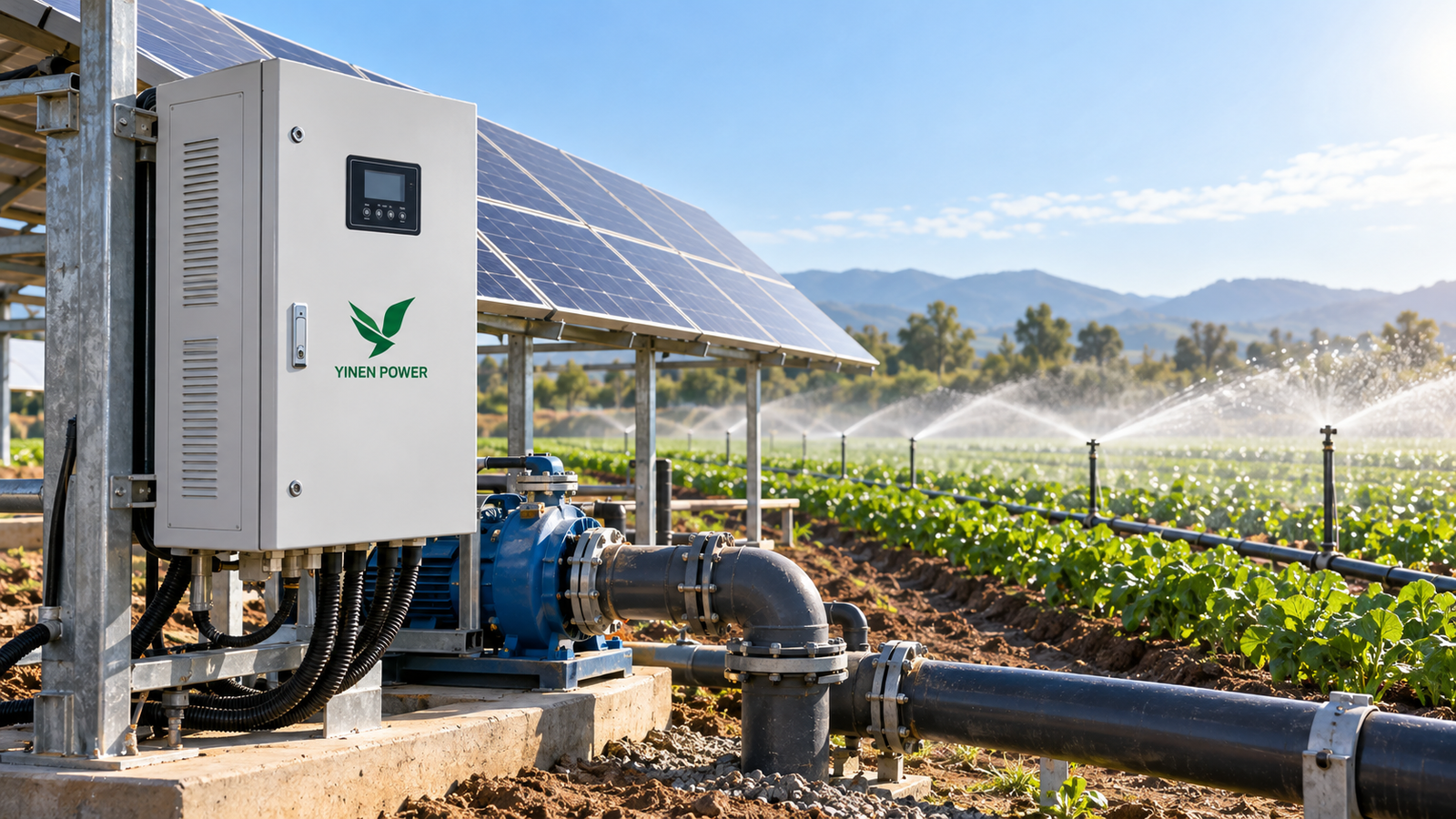
Irrigation systems
Irrigation commonly has changing zones, long distribution lines and defined watering periods. Size around the required flow at the highest-demand zone, then allow the control strategy to manage lower-demand operation rather than choosing an oversized drive for every condition.
Deep-well pumping
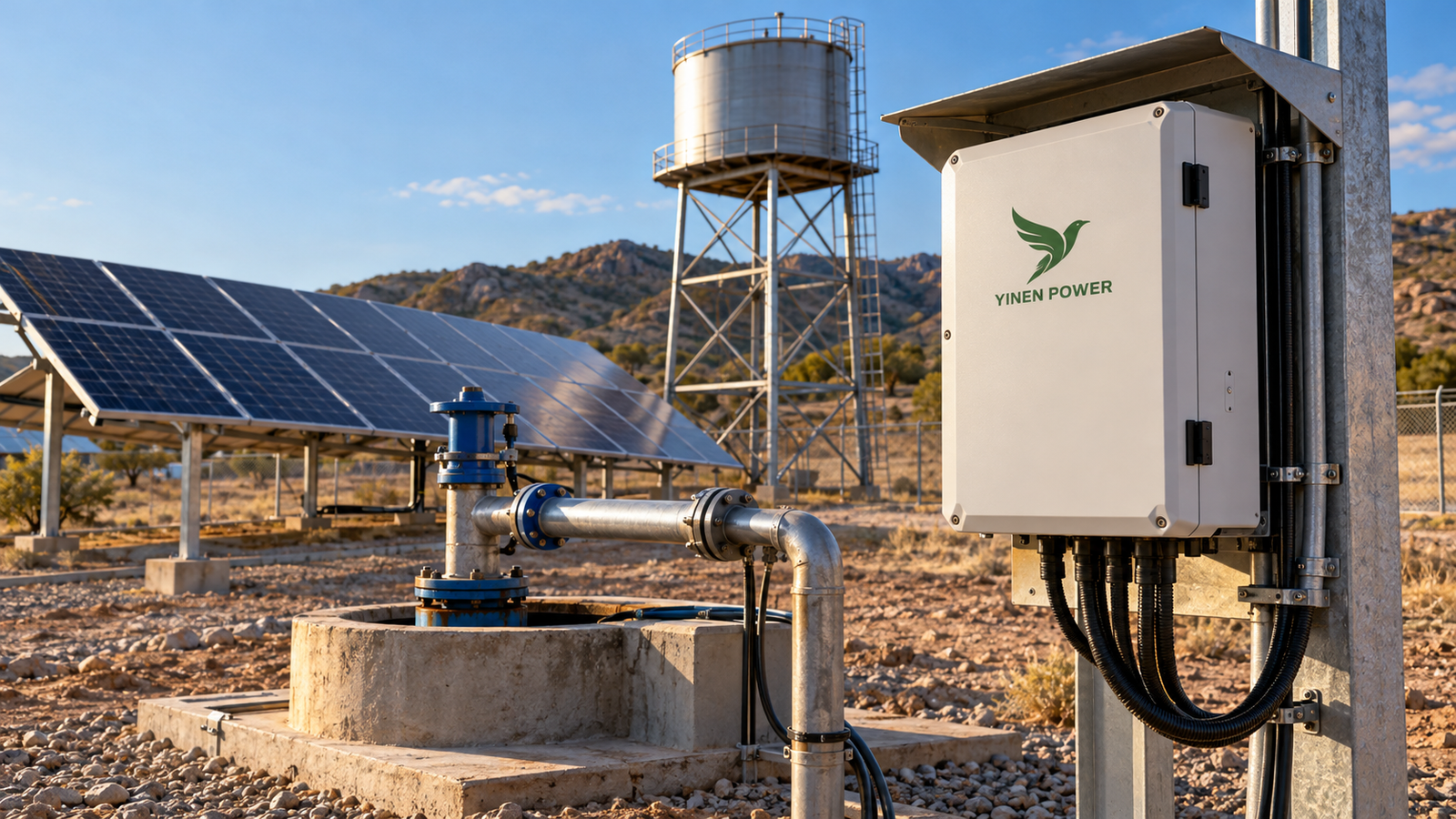
For boreholes, the pumping water level matters more than the well’s surface depth alone. Verify the submersible motor specification, cable run and required delivery head. A changing water level can materially change the real duty point.
Remote transfer and livestock water
For remote sites, water storage is often the simplest form of energy storage: pump during useful solar hours and use the tank later. If night operation or other critical loads are also required, review commercial and industrial energy storage applications as part of the wider power strategy, rather than adding a battery by default.

Common Solar Pump Inverter Sizing Mistakes
Avoid these common errors:
• selecting only from the pump’s rated kW;
• ignoring pipe friction and outlet pressure;
• connecting PV directly to a conventional AC motor without confirming compatibility;
• expecting constant flow in changing irradiance;
• adding battery storage before evaluating a water tank and pumping schedule;
• omitting the pump curve and motor nameplate from the enquiry.
What to Send for a Project Quotation
A useful project brief includes location, daily water need, target flow, total dynamic head, pipe information, PV module details, motor nameplate photos and the required control method. Site photos and a sketch of the water route can prevent misunderstandings. This information lets a supplier assess the solar water pump inverter, PV configuration and protection needs together.
Solar Pump Inverter FAQs
Can a solar pump run at night?
Not from solar generation alone. A water tank may cover many night-time needs; where the motor itself must run after dark, the project needs an appropriate alternate energy source and compatible control plan.
Can an existing AC pump be used?
Often it can, but compatibility must be checked from the motor plate, pump curve and electrical arrangement. Do not assume every motor, starting method or phase configuration is suitable for every solar pump inverter.
Plan Your Solar Pump Project with YINEN POWER
YINEN POWER can help turn your site data into a practical selection discussion. Contact our team with your pump information, water demand and site measurements to begin.