When considering home energy storage, you probably want to know what a battery can run, how long it can run it, and whether it will work with your existing inverter. A low voltage solar battery typically belongs to a roughly 48V battery platform. The right choice, however, depends on your loads, wiring, and equipment compatibility.

Is a Low Voltage Solar Battery Right for Your Home?
A low voltage home battery is worth considering if you want to use more of your own solar generation or keep essential loads such as lights, a router, and a refrigerator running during an outage. The familiar 48V and 51.2V figures describe nominal DC voltage on the battery side. Your home's AC circuits need a suitable inverter to convert and manage that power.
“Low voltage” is a product category, not an invitation to install the system yourself. Battery banks can deliver substantial current. A qualified installer must check protective devices, cable sizing, isolation, and local installation requirements against the selected equipment and site conditions.
How Do Solar Panels, the Battery, and the Inverter Work Together?
During the day, solar power can serve household loads. System settings determine whether surplus energy charges the battery and when the home draws power from the grid. The battery management system (BMS) monitors battery conditions, while the inverter handles power conversion and operating controls. Their communication and protection settings must be compatible.
A grid-connected system will not necessarily power your home during an outage. Check whether the chosen inverter supports backup operation, whether a backup output and essential-load circuits are installed, and how the system switches over. Owning a battery alone does not guarantee whole-home backup.
Size Energy in kWh, Then Check Power in kW
Energy capacity, measured in kWh, helps answer “how long?” Power, measured in kW, helps answer “how many appliances at once?” List the devices you must back up, their power ratings, and their expected running hours. Then estimate the energy required. A battery's nameplate capacity is not the same as the energy ultimately available at an AC outlet.
For example, imagine a homeowner who wants to run 100W of lighting and network equipment for six hours, plus a refrigerator averaging 80W over the same period. The simplified load calculation is about 1.08kWh. The actual system needs additional allowance for inverter losses, usable discharge limits, and the refrigerator's starting demand.

This example explains the calculation; it does not promise a particular runtime from any battery. A refrigerator compressor may briefly draw more power when starting than while running. Alongside total energy, check the inverter's continuous and surge output and the battery's permitted discharge current.
| Item to check | Question it answers | Information to request |
|---|---|---|
| Battery capacity (kWh) | How long might essential loads run? | Nominal and usable capacity; discharge conditions |
| System power (kW) | Which appliances can run together? | Continuous and surge output; load list |
| Operating voltage and current | Do the battery and inverter match electrically? | Both datasheets and their limits |
| BMS communication | Can charge limits and alarms be exchanged correctly? | Protocol, ports, and compatibility list |
| Installation and backup circuits | Can the site support the intended backup function? | Installation manuals, wiring plan, and local requirements |
How Do You Verify Battery Inverter Compatibility?
Matching “48V” labels do not establish compatibility. Compare the actual operating voltage ranges, maximum charge and discharge currents, charging settings, BMS communication protocols, and published compatibility lists. Whether a 51.2V LiFePO4 battery can connect to an existing 48V inverter is a model-specific question.
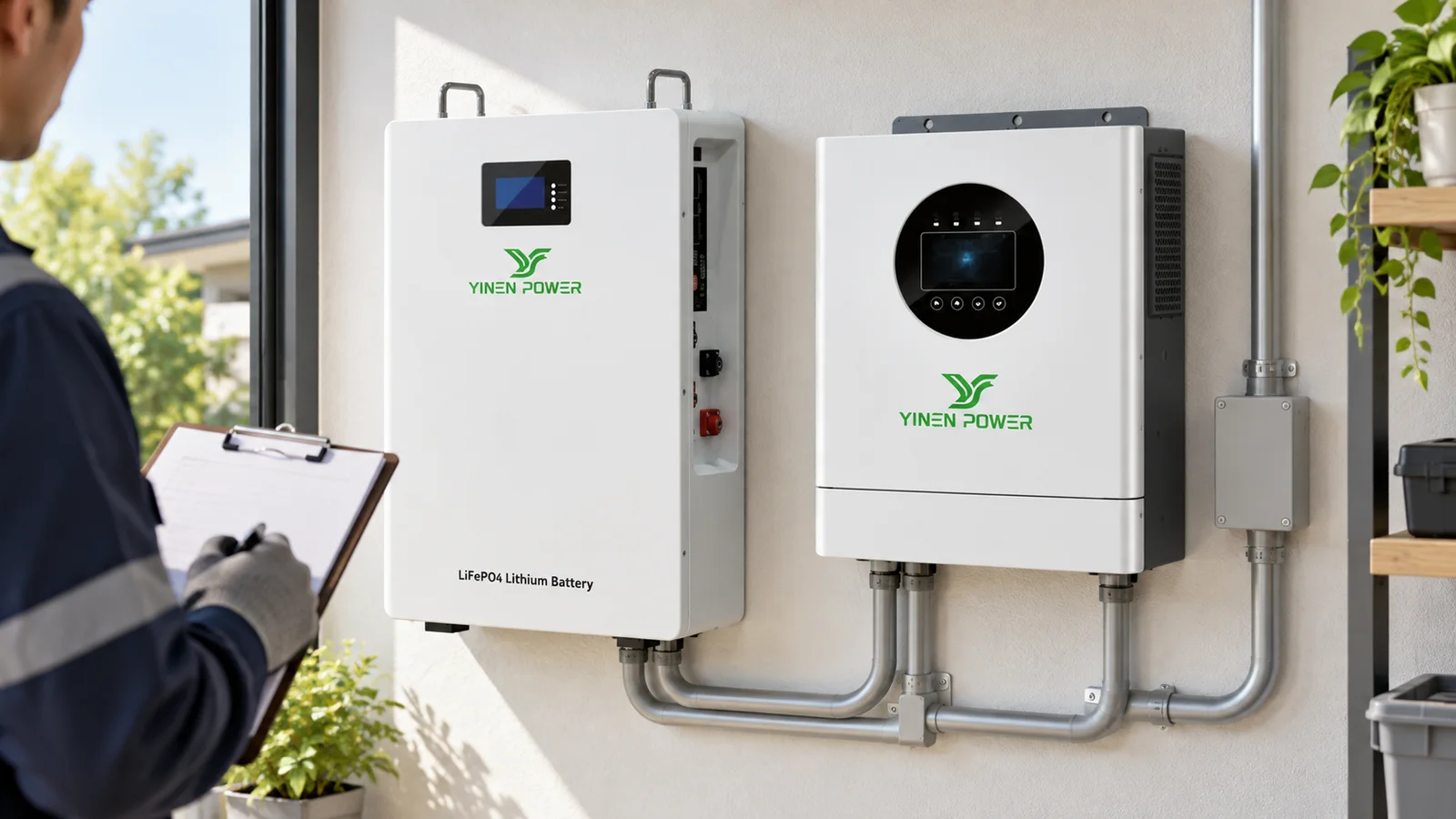
If you already have rooftop solar, provide the type and model of your existing inverter and describe the current wiring. Some installations may require a hybrid inverter; others may use a different retrofit design. Grid-connected, off-grid, and backup arrangements have different requirements. Ask your installer for a complete system diagram, not only individual device specifications.
What Should You Check Before Installation or Expansion?
Assess the proposed location's temperature, ventilation, weather exposure, load-bearing capacity, service clearance, and cable route. Compare those conditions with the installation manual for the selected model. Electrical codes, permits, and grid-connection rules also vary by market; the enclosure's appearance alone cannot establish suitability for indoor or outdoor use.
If you may add capacity later, check the battery series' permitted parallel configuration, maximum unit count, firmware requirements, and rules for mixing new and existing units at the initial design stage. Expansion changes more than kWh: it can affect current, protection, and distribution. Follow the manufacturer's model documents and the installer's final design.
How Can YINEN POWER Help You Choose?
YINEN POWER's home energy solutions include residential LiFePO4 batteries, hybrid solar inverters, and integrated inverter-and-battery systems. Start with your existing solar setup, essential loads, and backup target. Then request the datasheet and compatibility information for the proposed models.
A separate battery and inverter require you to check their interface and installation conditions together. An integrated system still needs scrutiny of usable capacity, output power, and backup functionality. Model-specific certifications, warranty terms, expansion limits, and performance should be confirmed in the official documents applicable to your market.
Frequently Asked Questions
Can a low voltage home battery back up an entire house?
That depends on simultaneous household demand, starting loads, inverter output, battery discharge capability, and whether whole-home backup wiring has been designed. Many households start with essential circuits for refrigeration, lights, and connectivity. Have an installer calculate your actual loads instead of relying on the battery's kWh figure alone.
Can a 51.2V battery work with my existing 48V inverter?
Similar nominal voltages do not make devices plug and play. Verify operating voltage, current limits, charging settings, and BMS communication against model-level compatibility documents from both sides. If those documents are unavailable, obtain written confirmation from the supplier before purchasing or connecting the equipment.
Can I use a battery without solar panels?
Some systems can charge a battery from the grid, but the available functions and operating modes depend on the inverter, wiring, and local rules. If you intend to add solar panels later, share that plan now so the selected equipment and distribution design do not constrain a future upgrade.
Can I add more batteries later?
Expansion is possible only when the specific battery series, inverter, and installation design permit it. Confirm parallel limits, applicable firmware, battery versions, and rules for combining old and new modules. Reserve adequate space, and do not apply another product's advertised maximum unit count to your proposed system.
Prepare This Checklist Before Requesting a Quote
A useful system recommendation starts with your actual electricity needs. Gather recent bills or usage records, a list of essential appliances and their power ratings, your target backup hours, and the make and model of any existing solar equipment and inverter. These details make it possible to evaluate capacity, power, and compatibility together.
- Existing solar capacity, inverter model, and grid-connection status.
- Essential loads, simultaneous use, and any motor starting loads.
- Outage frequency, desired backup time, installation location, and country or region.
- Future expansion plans and preference for separate or integrated equipment.
Share this information with YINEN POWER and request model-specific datasheets, compatibility records, and installation guidance. A low voltage solar battery is most useful when its actual system configuration matches both your daily electricity use and your outage priorities.
Share your essential loads, inverter model, location and backup target to discuss a compatible configuration.
Get a Quick Quote