A request for a 1 megawatt of power energy storage system is a useful starting point, but it is not yet a complete technical requirement. One megawatt (1 MW) describes how much power a system can deliver or absorb at a given moment. It does not say how long that output can be sustained, how much energy the batteries store, or which site loads should be supported.
For a commercial buyer, the practical question is: what must the system do at the site, for how long, and under which operating conditions? This guide explains the difference between MW and MWh, shows how those values shape a 1 MW BESS discussion, and outlines the information to prepare before requesting a proposal.
What Does 1 Megawatt of Power Mean?
Power is the rate at which electricity is delivered, used, or absorbed. A 1 MW system has a nominal power level of 1,000 kilowatts (kW). In a battery energy storage system, that number is closely related to the power-conversion equipment and the electrical interfaces that govern how quickly the system can charge or discharge.
That is why a 1 MW requirement is often connected to a moment in the load profile: a short demand peak, a production start-up period, a solar-export limit, or a defined critical-load event. It should not be treated as a promise that the system can operate indefinitely at 1 MW.
MW vs MWh for a 1 Megawatt of Power Project
MW tells you the instantaneous power capability. MWh tells you the amount of energy available over time. The relationship between them determines duration:
Duration (hours) = usable energy (MWh) / power (MW)
For illustration, a 1 MW / 2 MWh system may be planned around two hours at its stated power level, while a 1 MW / 4 MWh system may be planned around four hours. Actual dispatch, state-of-charge limits, auxiliary consumption, degradation allowances, controls, and local requirements must be confirmed in the project design. The important point is simple: the same 1 MW power rating can serve very different goals when the energy duration changes.
| Planning expression | What it communicates | Question to validate |
|---|---|---|
| 1 MW / 1 MWh | High power with a shorter energy window | Is the objective a brief peak or fast response event? |
| 1 MW / 2 MWh | One megawatt paired with a longer operating window | Does the load profile require this duration after losses and operating limits? |
| 1 MW / 4 MWh | One megawatt paired with a still longer energy requirement | Will the installation space, interconnection, and operating plan support it? |
Why a 1 Megawatt of Power Rating Is Not a Project Design Method
It is tempting to translate 1 MW into a number of homes. That shortcut can be misleading because residential demand varies by region, weather, appliance use, time of day, and coincidence of peak loads. A commercial facility has the same issue in another form: its peak demand may be brief, recurrent, seasonal, or tied to a specific process.
Instead, begin with interval data from the actual meter and identify the time periods that matter. For an industrial or commercial site, the relevant comparison is not an average household figure; it is the facility’s measured demand, the duration of the target event, and the electrical limits that apply at the point of connection.
Where a 1 Megawatt of Power BESS Can Fit in a Commercial Energy Strategy
A 1 MW BESS may be considered for several commercial objectives. The right application depends on the site’s tariff structure, load behavior, generation profile, control strategy, and permissions – not on the power number alone.
- Demand management: discharge during selected high-demand intervals when the site strategy and connection agreement allow it.
- Solar-plus-storage coordination: store eligible solar generation for a later operating period, subject to system design and local rules.
- Load support: support a defined part of the site load during planned operating conditions.
- Energy-management flexibility: give the facility a controllable resource that can be scheduled around its measured load profile.
Consider a hypothetical distribution center whose loading equipment, refrigeration, and charging loads overlap in the late afternoon. The project team would first review the interval data, determine the maximum power reduction needed, then test how often and how long that reduction is needed. This is an illustrative planning situation, not a performance claim or a customer case.
What Is Included in a 1 MW Commercial Battery System?
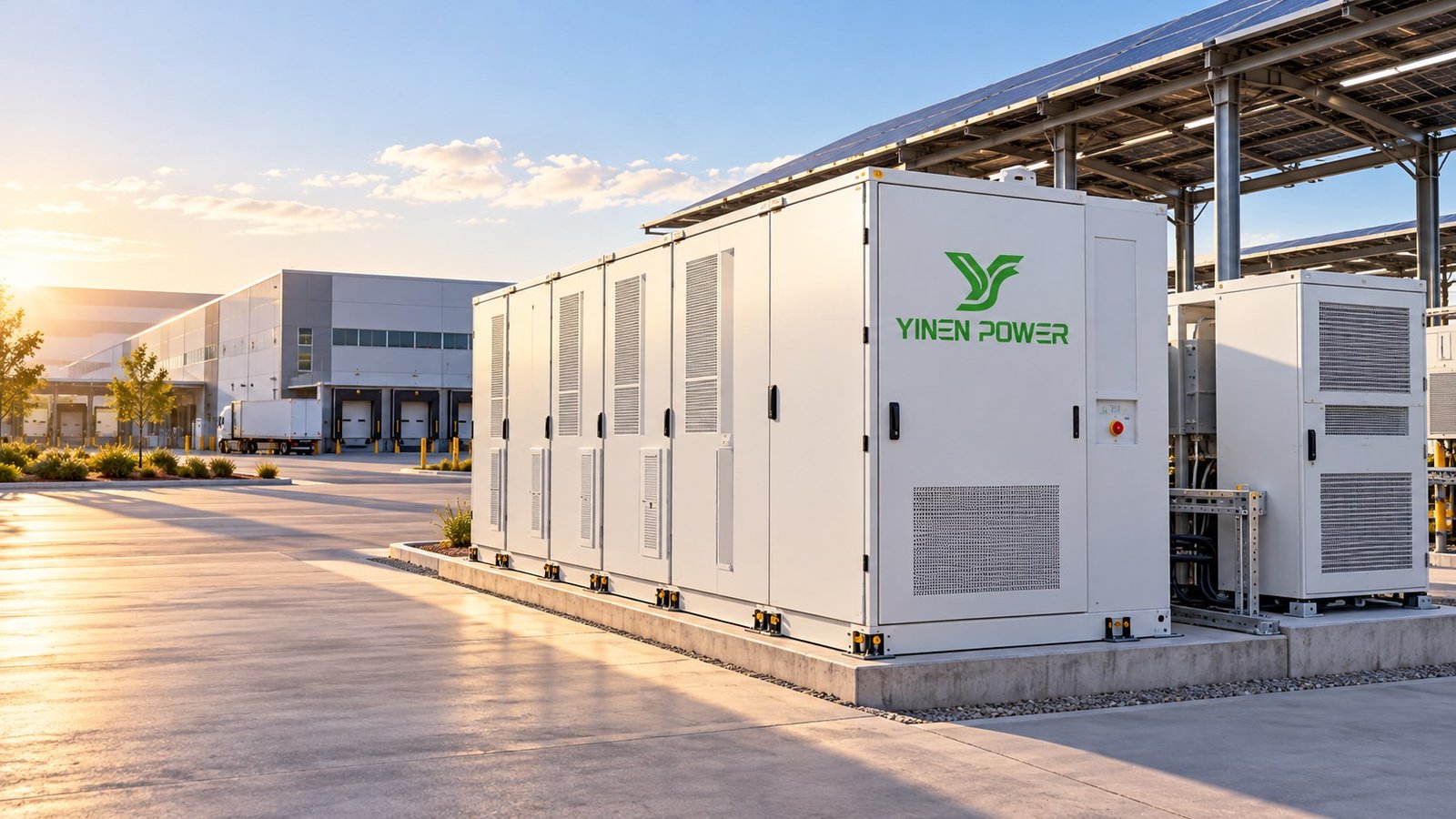
The system boundary must be written into the proposal. Depending on the project, a commercial battery energy storage system may include battery cabinets or racks, a battery management system (BMS), power conversion system (PCS), energy management system (EMS), protection equipment, communications, and AC/DC interfaces. Civil works, transformer equipment, switchgear, fire-protection arrangements, utility studies, installation, and commissioning responsibilities may be separate project items.
For a broader overview of roles, controls, and system boundaries, see what a BESS is and how its main components work. For applications at factories and campuses, our guide to commercial and industrial energy storage planning explains the decision path in more detail.
Seven Questions to Answer Before Requesting a 1 MW BESS Proposal
- What is the measured maximum demand? Provide interval data rather than only a monthly bill total.
- How much power must be reduced, supplied, or absorbed? Define the MW or kW target and the time window.
- How long must the power be sustained? This determines the MWh requirement.
- What is the desired operating priority? Peak management, solar coordination, backup planning, or another purpose may use different control logic.
- What equipment already exists? Document transformers, switchgear, PV, generators, meters, and communication interfaces.
- What are the physical site constraints? Check location, access, clearance, foundations, cable routes, noise requirements, and maintenance space.
- Which parties own each project task? Clarify engineering, permitting, utility interconnection, installation, protection coordination, commissioning, and ongoing operation.
How to Compare 1 MW BESS Proposals Fairly
Do not compare proposals on the headline power rating alone. Ask every supplier to state the same basis of comparison: AC or DC rating, nominal and usable energy, target duration, operating assumptions, supplied equipment, exclusions, delivery boundary, site services, and commissioning scope. This makes it easier to identify whether two quotes describe the same project. A 1 megawatt of power proposal is comparable only when these project boundaries are equally clear.
When reviewing a 1 megawatt of power BESS project, ask whether the stated rating is at the AC or DC boundary and which operating limits are included. A consistent answer is more valuable than a headline figure alone.
Cost also depends on the scope as well as the MW/MWh ratio. A system with the same power rating can change substantially when energy duration, civil works, grid interfaces, controls, or installation responsibility change. If you are budgeting a smaller commercial configuration as a reference point, read our 100 kWh commercial battery system cost guide; a project-specific RFQ is still required for a meaningful 1 MW comparison.
Plan a 1 MW Project Around the Job It Must Do
One megawatt of power is meaningful only when it is connected to a real site requirement. Start with the load data, define the MW target and MWh duration, identify the electrical and construction boundaries, then ask suppliers to respond to one consistent scope. This produces a more useful engineering discussion than a headline capacity alone.
YINEN POWER can help you structure the technical questions for a commercial energy storage inquiry. Share your load profile, target operating window, site single-line information where available, and preferred project scope so the conversation can begin with the details that matter.
Frequently Asked Questions
Is 1 MW the same as 1 MWh?
No. One MW is a power rating; one MWh is an energy quantity. A 1 MW system operating for one hour would correspond to 1 MWh of energy in a simplified illustration, before project-specific operating factors are applied.
How long can a 1 MW BESS run?
It depends on usable energy capacity and the operating plan. A 1 MW figure alone does not provide the duration; you need the MWh value and the project’s usable-energy assumptions.
What should I send with a 1 MW battery storage inquiry?
Send interval load data, a description of the operating objective, target MW and duration, site drawings or single-line information when available, existing generation details, and any interconnection or installation constraints.
Need to evaluate a 1 MW commercial battery energy storage project? Contact YINEN POWER to begin with a scope-focused discussion.