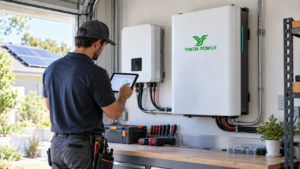
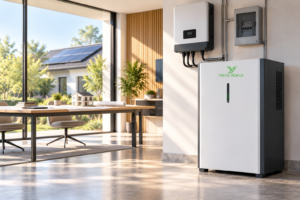
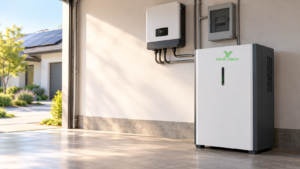
Solar panel efficiency vs wattage is one of the most common comparisons in a PV quotation, but the two numbers answer different questions. Efficiency shows how effectively a module uses a given area of sunlight. Wattage shows the module's rated output under standard test conditions. A higher-wattage module is not automatically more efficient, and the most efficient solar panels are not automatically the best commercial purchase.
For your project, the useful choice depends on the usable area, module dimensions, handling limits, shading, inverter input window, load profile and budget. If batteries are part of the plan, you also need to decide what energy should be stored and when it should be available. This guide helps you turn nameplate figures into a practical shortlist.
Solar Panel Efficiency vs Wattage: The Difference in Plain Terms
Solar panel efficiency is the percentage of sunlight that a module converts into electricity under stated test conditions. It is most helpful for comparing how much power can fit into a limited roof, façade or carport area. When two modules have similar dimensions, the more efficient one will normally have the higher power density.
Solar panel wattage, expressed as W or Wp, is the rated power at the module's maximum power point under those same test conditions. It is the figure used to add up array capacity. It does not tell you the module's physical size on its own: a larger module can show a higher wattage while having a lower efficiency than a smaller one.
This is why a valid comparison starts with the data sheet, not the biggest headline number. Check module dimensions, efficiency, rated power, electrical characteristics, permitted mechanical loading and the inverter's voltage/current limits together.
| Metric | What it tells you | Most useful when | It does not tell you by itself |
|---|---|---|---|
| Module efficiency (%) | Power generated per unit of module area under stated conditions | Roof or mounting area is limited | Annual site yield, battery fit or installed cost |
| Module wattage (W/Wp) | Rated output of one module under stated conditions | Sizing the array and counting modules | Module footprint, real operating temperature or system losses |
| Module dimensions and weight | Physical installation and handling demand | Roof layout, logistics and mounting design | Electrical compatibility |
| System yield (kWh) | Expected energy over time at the project site | Comparing project value | Whether the design is electrically or structurally feasible |
When Higher Module Efficiency Matters Most
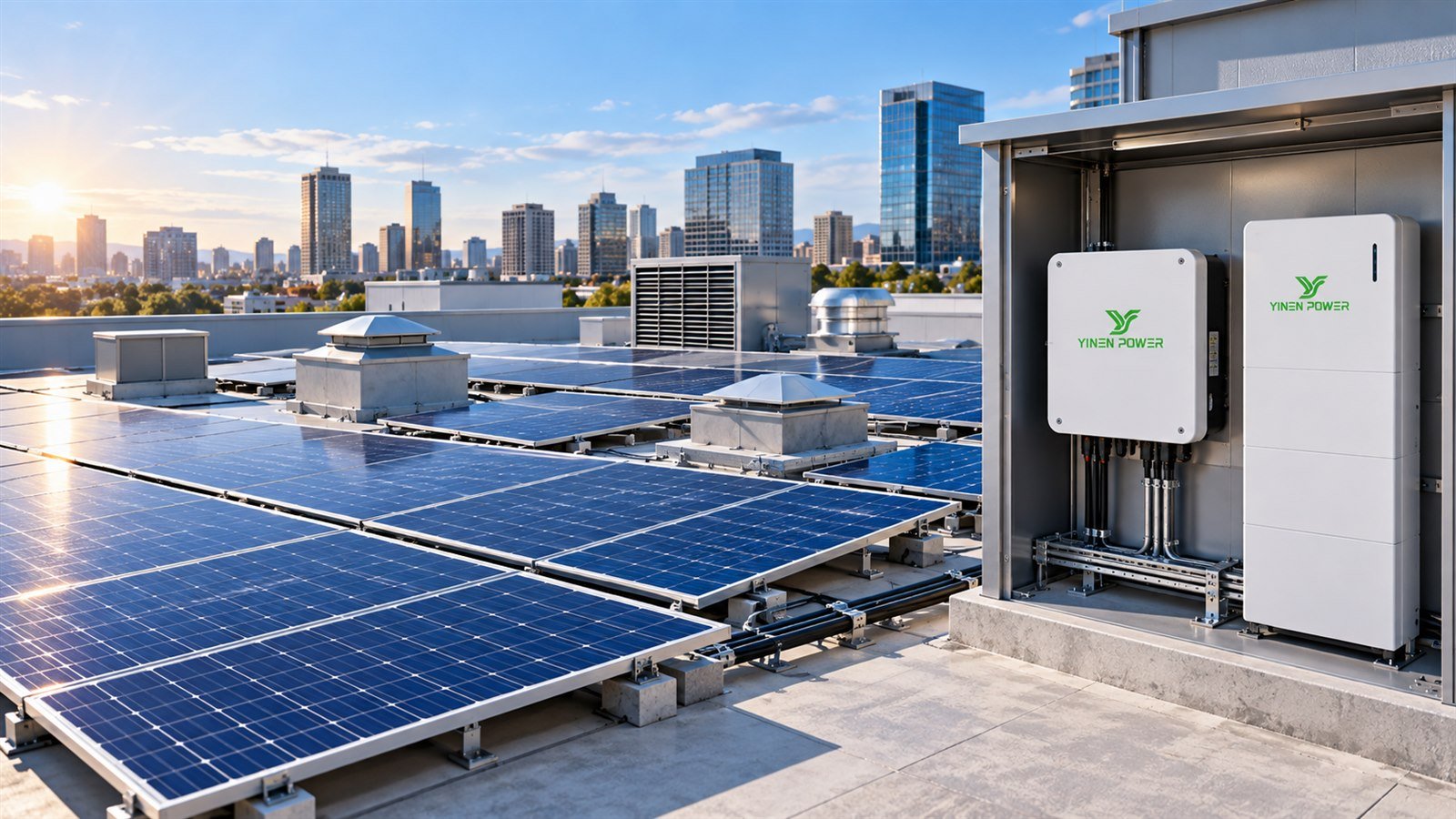
Higher module efficiency is valuable when every square metre has a job to do. A compact residence with dormers and vents, a carport with a defined canopy size, or a commercial roof with setbacks may reach its usable-area limit before it reaches its target PV capacity. In those cases, a higher-efficiency module can help you place more DC capacity in the available footprint.
Consider a small roof where the layout can accept only a fixed number of modules. The project team should first map the usable surface, access paths, fire or maintenance clearances and shade sources. Only then does it make sense to compare W/m² or module efficiency; otherwise, a nominally efficient module may still produce an awkward layout or exceed handling limits.
Higher efficiency can also reduce the area required for a target array size. That may be helpful where roof space competes with other equipment, but it should be weighed against the delivered module cost, availability and replacement strategy. Ask for the exact module data sheet rather than making a decision from a technology label alone.
When Solar Panel Wattage Carries More Weight

Solar panel wattage is often more important where the site has sufficient space and balance-of-system work is a major share of the project cost. Fewer modules for the same DC capacity can mean fewer mounting points, electrical connections and string-management steps. The potential advantage must be checked against module size, lifting method, roof load, transport route and the crew's installation practice.
For a large industrial roof or ground-mounted array, the question is usually not “Which panel has the highest efficiency?” but “Which module format gives the required energy at a sound installed cost and can be supplied consistently?” A very large module may lower module count yet introduce handling or replacement constraints that cancel part of the expected savings.
Before approving a high-wattage format, confirm these practical points:
- Can the mounting layout safely accommodate the module dimensions, weight and wind or snow design conditions?
- Does the string design stay within the selected inverter's maximum DC voltage and input-current limits in local temperature conditions?
- Are the modules, connectors and mounting components available for the delivery schedule and future service needs?
- Does the crew have a safe unloading, lifting and installation plan for the chosen format?
- Does the proposal compare total delivered and installed cost rather than module price alone?
Choose the Module Around the Site, Not a Brand Ranking
Searches for the most efficient solar panels often lead to brand lists. Rankings can be useful for market awareness, but they are not a design. A module that is appropriate for one site can be the wrong choice for another because roof geometry, climate, structural limits, inverter configuration and commercial terms are different.
For a project quotation, use a technology-neutral comparison. Ask the supplier to provide the exact module data sheet, manufacturing origin where relevant to your procurement policy, electrical values, dimensions, loading information, warranty documents and delivery status. Compare like with like: the same mounting conditions, the same system size target and the same assumptions for shading and losses.
Recent industry reports show continued improvement in commercial crystalline-silicon modules and a strong shift toward n-type technologies. That trend is useful context, not a shortcut around site design. The right selection still needs to satisfy the project’s electrical, mechanical and commercial constraints.
Efficiency Is Only One Part of Real-World PV Performance
Nameplate efficiency is measured under standardized conditions. Your operating conditions will not remain standardized throughout the day or year. Module temperature, irradiance, orientation, shading, soiling, ventilation, cable losses and inverter conversion all influence delivered energy.
Temperature deserves particular attention on dark roofs, hot climates and tightly packed installations. A module's data sheet explains how output changes as cell temperature rises, but the operating temperature also depends on mounting clearance and site conditions. Do not compare temperature behaviour only from a headline figure; review the module documentation and proposed layout together.
Partial shading can be more consequential than a small difference in nameplate efficiency. Chimneys, parapets, nearby buildings, trees and even row-to-row shading can change the production profile. A shade assessment and sensible string layout should happen before the final module choice. Include an inspection and cleaning plan where dust, pollen, salt or industrial pollution is relevant.
Add Inverter and Battery Fit to the Same Decision

A PV module does not operate alone. In a solar + storage project, the inverter turns available DC energy into usable AC energy, while the battery stores energy for a later need. A good system decision therefore asks two further questions: how much power must be supplied at one time, and how much energy must be available over time?
For example, a 7.2 kW inverter and a 12 kWh battery describe different limits. The inverter rating relates to the power that compatible loads can receive at one time; the battery energy figure relates to how long a given load may be supported within operating limits. Neither number should be selected from the PV array size alone.
If your project includes backup, identify essential loads and their starting behaviour before choosing equipment. Pumps, motors, refrigeration and air-conditioning may have different starting requirements from lighting or electronics. For smaller backup applications, review YINEN’s single-phase off-grid hybrid inverter options against the exact load, battery voltage and PV input requirements.
For residential projects, a low-voltage solar battery for home should be selected around the household's time-of-use, critical circuits, desired backup period and compatible inverter—not simply around a high PV module rating.
A Quick Decision Matrix for Common Project Types
| Project type | First constraint to check | Typical panel priority | System check that cannot be skipped |
|---|---|---|---|
| Compact residential roof | Usable unshaded area | Efficiency and module fit | Inverter input window, essential-load backup plan |
| Commercial rooftop | Layout, structure and installed cost | Balanced efficiency and wattage | Roof loading, access, string design and installation method |
| Ground-mount or open site | Total installed cost and logistics | Wattage, module format and supply | Civil layout, handling plan and grid/interconnection design |
| Off-grid or backup system | Load power and required autonomy | PV capacity matched to charging window | Battery kWh, inverter kW, surge loads and protection design |
| Peak-management project | Interval load profile | PV fit to site and operating plan | Battery power, controls, tariff and interconnection rules |
As an illustrative example, a facilities manager planning a warehouse array may initially prefer the highest-wattage module because it reduces the module count. During the layout review, the team may find that the roof access route and lifting equipment favour a more manageable format. The better commercial solar panel choice is then the option that meets the energy target while keeping installation, safety and service planning workable—not the largest number on the data sheet.
Commercial Buying Checklist Before You Order
Use the following checklist to make conversations with a supplier, EPC or installer more productive:
- Measure usable installation area and record obstructions, shading periods and access routes.
- Share the target system size, annual energy objective and available electricity-use or interval-load data.
- Confirm roof structure, mounting conditions and local wind, snow, fire and electrical requirements with qualified parties.
- Compare module data sheets, including rated power, efficiency, dimensions, electrical limits and mounting requirements.
- Confirm inverter compatibility, string design, battery plan and protection requirements before purchasing components.
- Request a clear scope for delivery, commissioning support, documentation, exclusions and service responsibilities.
- For solar + storage, define whether the priority is self-consumption, backup, time-of-use shifting, demand management or a combination of these goals.
Frequently Asked Questions
Is a higher-wattage solar panel always more efficient?
No. Wattage describes the module's rated output, while efficiency describes how effectively it uses its area. A larger module can have higher wattage even if a smaller module has a higher efficiency percentage. Compare dimensions and data-sheet values together.
Are the most efficient solar panels always worth the premium?
They can be worthwhile when usable area is genuinely constrained and extra power density has a measurable value. Where space is plentiful, installed cost, module handling, supply availability and the complete system design may matter more than a small efficiency difference.
How do I compare solar panel efficiency vs wattage for a commercial roof?
Start with a roof layout and structural review. Then compare modules by W/m², W/module, dimensions, weight, electrical limits, availability and delivered cost. The final comparison should include the inverter, mounting system and labour assumptions, not only the module price.
Does a battery make a PV system more efficient?
A battery can make more solar energy usable at the times you need it, but it also introduces charge and discharge losses and must be sized for the operating goal. Evaluate usable energy, charge/discharge power, controls and load timing as part of the whole solar battery system.
Plan the Right PV and Storage Combination with YINEN POWER
The best panel is the one that fits your site and your operating goal. Start with the physical layout and load profile, then compare solar panel efficiency vs wattage alongside inverter compatibility, battery capacity and installation constraints. YINEN POWER can support one-stop photovoltaic panel procurement and help you begin a system discussion around your project requirements.
To request a tailored recommendation, share your destination country, usable installation area, target PV capacity, load type, peak load, storage goal and preferred delivery timeframe through the YINEN POWER contact page.